
In a place of sanctuary, during a service of worship, a national nightmare has unfolded.
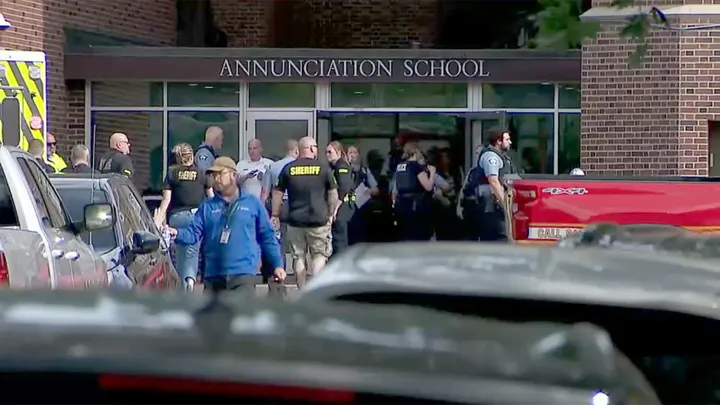
A gunman opened fire on an elementary school Mass in Minneapolis on Wednesday, targeting children in their pews and turning a celebration of a new school year into a scene of unspeakable horror.
This act of “incomprehensible” cruelty has not only shattered a community but has also violently thrust the nation back into its most painful and intractable constitutional debates – over the right to safety, the right to worship, and the right to bear arms.
At a Glance: The Minneapolis Church Shooting
- What’s Happening: A gunman has killed two children (ages 8 and 10) and injured 17 other people in a mass shooting at Annunciation Catholic School in Minneapolis.
- The Attack: The shooter fired a rifle through the church windows from outside during a Mass for students, before taking his own life. Fourteen of the 17 injured were children.
- The Response: The attack has drawn condemnation from local, state, and federal leaders, including President Trump.
- The Constitutional Issues: The tragedy immediately reignites the national debate over the Second Amendment and gun control. As an attack on a religious service, it also strikes at the heart of the First Amendment’s protection of the free exercise of religion.
‘The Sheer Cruelty and Cowardice’
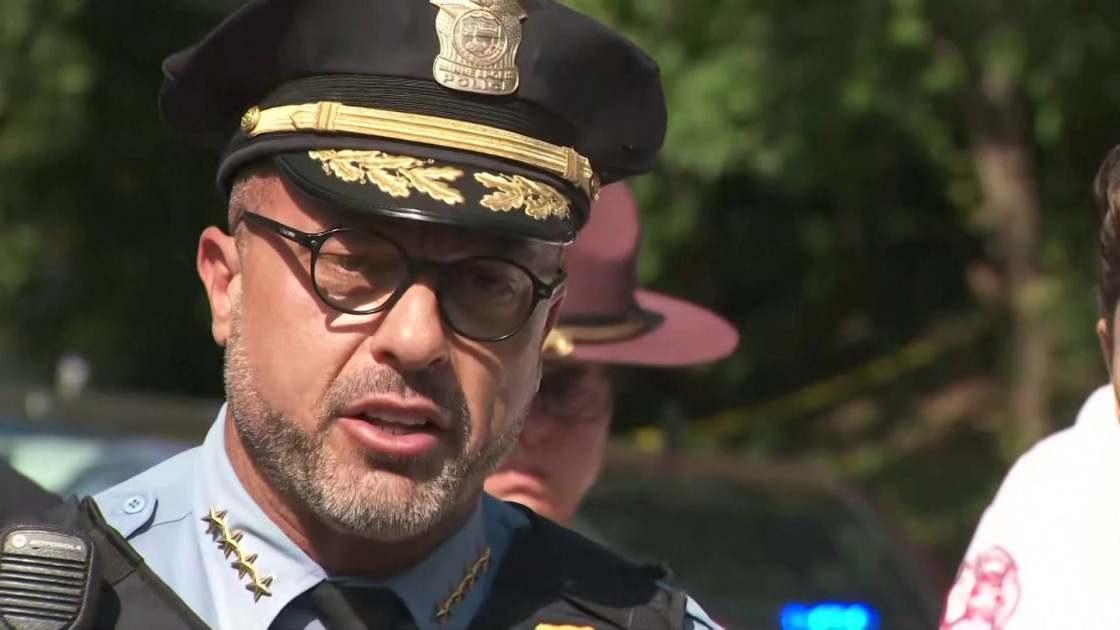
The details of the attack, as described by Minneapolis Police Chief Brian O’Hara, are horrifying.
During a Mass to mark the first week of classes, a gunman, identified by law enforcement sources as being in his early 20s, approached the outside of the church and began firing a rifle through the windows at the children sitting inside.
“This was a deliberate act of violence against innocent children and other people worshiping. The sheer cruelty and cowardice of firing into a church full of children is absolutely incomprehensible.” – Minneapolis Police Chief Brian O’Hara
Two children, ages eight and ten, were killed in the pews. The shooter was later found deceased at the rear of the church from an apparent self-inflicted gunshot wound.
An Attack on a Sacred Space
This was not only an attack on a school; it was an attack on a house of worship during a religious service. This fact strikes at one of the oldest and most fundamental American freedoms.
The First Amendment to the Constitution begins by guaranteeing the “free exercise” of religion. At its core, this is a promise that Americans can worship in peace and safety, free from persecution or violence.
An attack on people in their pews is a violent assault on that foundational freedom. It transforms a sanctuary, a space constitutionally protected for peace and reflection, into a place of terror.
The Inescapable Constitutional Debate
In the wake of this tragedy, the nation will once again be forced to confront its deep and painful divisions over the Second Amendment.
The right “to keep and bear Arms” is a core constitutional principle, but its scope and its limits are the subject of the most contentious debate in American life.
This horrific event will inevitably and immediately fuel passionate calls for new gun control measures, from waiting periods to bans on certain types of firearms.
At the same time, gun rights advocates will argue that such laws would not have stopped a determined killer and would unconstitutionally infringe upon the rights of law-abiding citizens to defend themselves.
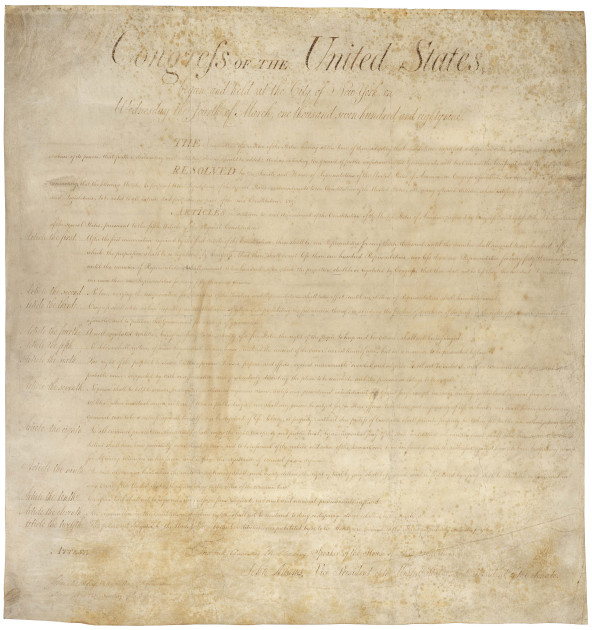
This is the unavoidable constitutional crossroads the nation arrives at after every mass shooting, a clash of deeply held beliefs about the nature of freedom and the price of security.
A Nation’s Grief and a System Under Strain
The swift and coordinated response from local police, the governor’s office, and federal agencies like the FBI and ATF is a demonstration of the government’s most basic constitutional duty: to “insure domestic Tranquility” and provide for the safety of its citizens.
But the tragedy itself represents the most profound failure of that duty.
The horror in Minneapolis will once again test the American constitutional system – its ability to balance fundamental rights like the freedom of worship and the right to bear arms, and its capacity to meet its most solemn and sacred obligation: to protect its children from harm.