
In a federal courtroom just blocks from where the historic East Wing of the White House once stood, a judge delivered a warning that cuts through the noise of Washington partisanship. While declining to immediately halt construction on President Trump’s massive new ballroom project, U.S. District Judge Richard Leon issued a stark ultimatum to the administration: proceed at your own peril.
The conflict pits the Executive Branch’s desire to reshape the presidential complex against the historic preservation laws designed to protect it. But Judge Leon’s ruling introduced a new, tangible risk for the White House. If the administration pours concrete that “locks in” a design before receiving proper legal approval, the court may force them to dig it back up.

The “Concrete” Warning
The National Trust for Historic Preservation sought an emergency order to stop the $300 million project, arguing that the administration was bypassing mandatory reviews by Congress and the National Capital Planning Commission. Judge Leon, a George W. Bush appointee, denied the immediate stop-work order, noting that above-ground construction isn’t slated until 2026.
However, his warning regarding the ongoing underground work was explicit. He cautioned government lawyers that if they lay foundations or infrastructure that effectively dictate the size and shape of the ballroom before the legal process is complete, they face a severe remedy.
“If it does, the court will address it, I assure you of that,” Leon said, implying that any “irreversible” work done now could be ordered reversed—literally torn out of the ground—if the final approvals don’t match the poured concrete.
National Security or a “Party Palace”?
The administration’s defense relies on a powerful, if curious, argument: national security. Justice Department lawyers claimed that halting the project would impede the Secret Service’s protective mission, citing the fact that the now-demolished East Wing sat atop an emergency operations bunker.
This raises a fascinating constitutional query. Does the “national security” umbrella cover the construction of a 90,000-square-foot ballroom designed to host 1,000 guests? The administration argues the project is necessary to end the use of temporary tents for diplomatic events. Critics argue it is an expansion of the “imperial presidency”—a permanent, privately funded alteration to a public monument, justified by security concerns but designed for gala dinners.
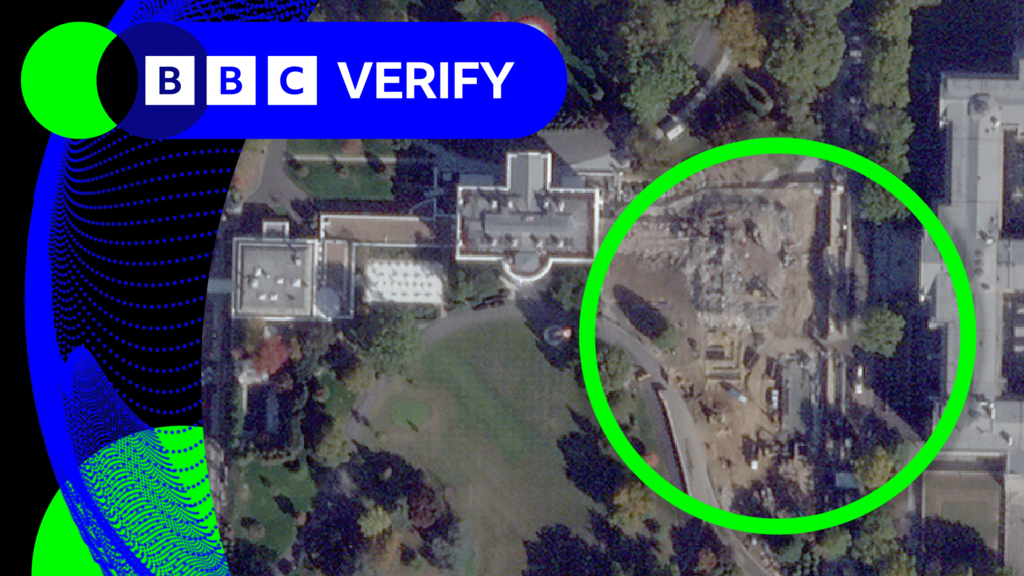
The Phantom East Wing
Perhaps the most sobering aspect of this legal battle is what has already been lost. The lawsuit notes that the historic East Wing—a fixture of the White House complex since 1942—was demolished in October. That “irreversible” action happened before the court could intervene, a fact the administration now uses to argue against a pause.
Historical Tidbit: The White House has been expanded before, most notably the 1902 renovation by Teddy Roosevelt (which created the West Wing) and the 1948 gut renovation by Harry Truman. However, those projects generally involved heavy Congressional oversight, unlike the current privately funded initiative.
This effectively presents the court with a fait accompli. The historic structure is gone; the hole is dug. The legal battle now is not about preservation of the old, but control over the new.
Who Owns the White House?
This case is a “litmus test” for the concept of the “People’s House.” Does the sitting President have the plenary authority to tear down and rebuild parts of the Executive Mansion as he sees fit? Or do the National Historic Preservation Act and the oversight powers of Congress mean that the building belongs to the public, not the temporary occupant?
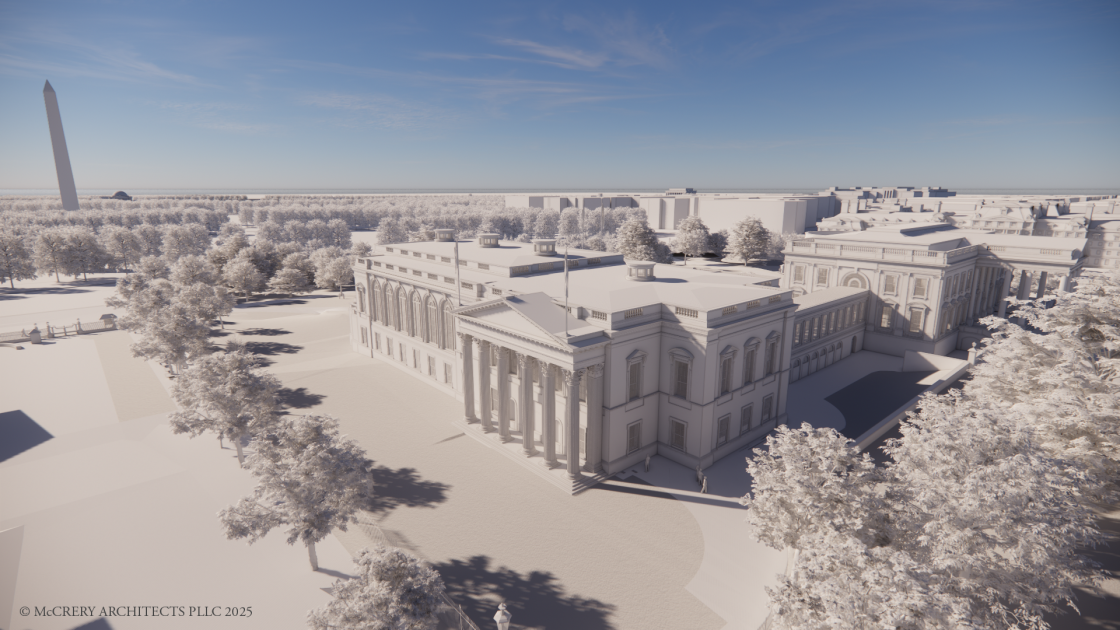
Judge Leon’s ruling kicks the can down the road to a January hearing, but the stakes are set. The administration has been put on notice: the President may have the bulldozers, but the Judiciary reserves the right to order them into reverse. If the White House bets that it can build faster than the courts can rule, they may find themselves facing an order to dismantle their work, piece by piece.