
It was the buzzword that took Washington by storm earlier this year: DOGE.
The “Department of Government Efficiency,” led by billionaire Elon Musk, promised to revolutionize the federal government, slash trillions in spending, and dismantle the bureaucracy. But as Musk’s tenure ended and the headlines faded, the massive national debt kept growing.
Now, a group of lawmakers in the House of Representatives is trying to prove that the movement didn’t leave town with the tech mogul. Their effort to revive the efficiency crusade is more than a budget battle; it is a test of whether Congress – the branch of government that actually holds the checkbook – has the political will to cut the spending it authorized in the first place.
Discussion
Fake news media want us to forget Musk's vision like they forgot Hunter's laptop!
This government's the real joke, hiding behind the scenes while wasting our money! Elon Musk had the right idea cutting through the nonsense. Democrats always blocking real change with their fake news. Congress better get off their lazy tails and make DOGE happen! MAGA!
Now is not the time to back off, but cut more expenses that are wasting our tax dollars. I appreciate that we are destroying the unelected administrative state. Keep up the good work.
We need to clean up the Govt.
Leave a Comment
Leave a Comment
The State of DOGE at a Glance
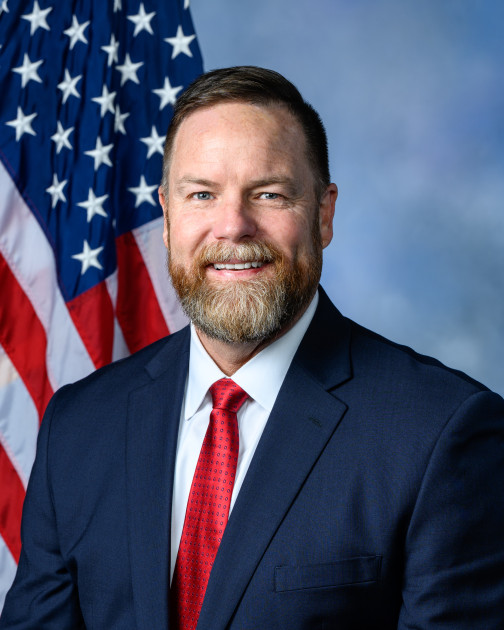
- What’s Happening: Rep. Aaron Bean (R-FL), co-chair of the House DOGE Caucus, is launching a push to revive the government efficiency movement.
- The Context: The initiative, originally led by Elon Musk, aimed to cut $2 trillion but is currently claiming roughly $214 billion in estimated savings.
- The Goal: To target “waste, fraud, and abuse,” specifically focusing on unused federal office space and the $38 trillion national debt.
- The Constitutional Issue: A reality check on the Power of the Purse (Article I). While the President and advisors like Musk can propose cuts, only Congress has the constitutional authority to enact them.
‘DOGE Is Not Dead’
The furor that surrounded President Trump’s appointment of Elon Musk to lead the efficiency commission has quieted, but the fiscal problems it aimed to solve have not.
Rep. Aaron Bean, who co-founded the DOGE Caucus in the House to support the administration’s goals, admits the issue is no longer on the “front burner” but insists the battle is far from over.
“DOGE is alive… We’re still $38 trillion in debt, that’s growing. So anything we can possibly do — we’re still looking to continue the DOGE efforts.” – Rep. Aaron Bean
Bean plans to convene new caucus meetings to refocus legislative attention on the unglamorous work of cutting red tape. This signals a shift from the high-profile, celebrity-led phase of the efficiency push to the grinding, procedural phase within the halls of Congress.
The Musk Legacy: Ambition vs. Reality
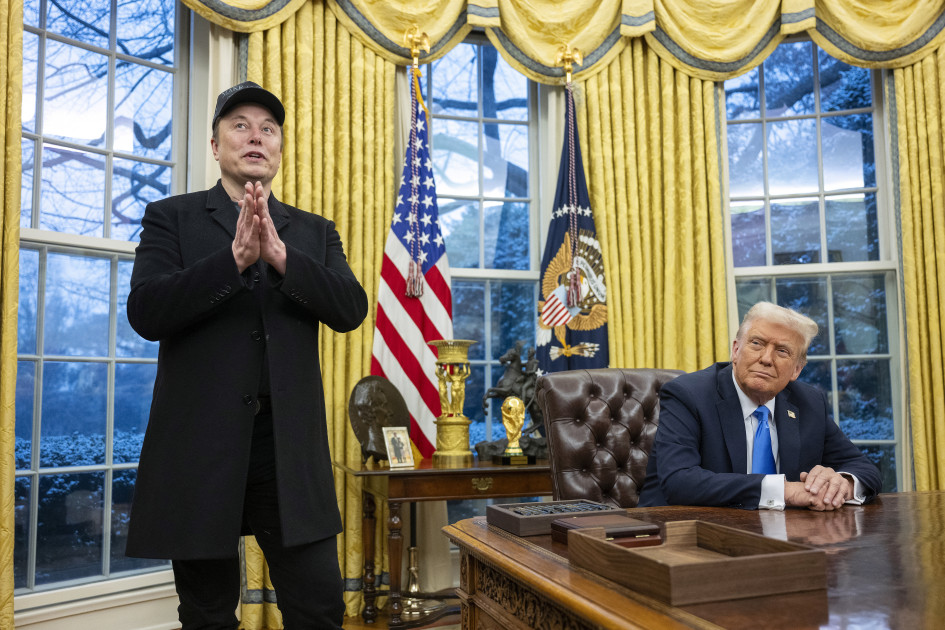
The “Department of Government Efficiency” was never a real government department; it was an advisory initiative. Its goal, stated by Musk, was to find $2 trillion in savings.
According to the initiative’s website—which has not been updated since October—the estimated savings identified so far stand at $214 billion. While a significant number, it highlights the immense difficulty of slicing into the federal budget.
The transition from Musk’s external pressure campaign to Bean’s internal legislative push illustrates the limits of executive influence. A President (or his advisor) can identify waste, but under the Constitution, they cannot simply cancel spending that has been signed into law. That requires the cooperation of 535 lawmakers who often have a vested interest in protecting programs that benefit their districts.
Targeting the Empty Offices
With the grand ambition of trillion-dollar cuts proving elusive, the House caucus is pivoting to a more tangible target: real estate.
Rep. Bean singled out the vast inventory of unused federal office space as a prime opportunity for bipartisan cost-cutting. In a post-pandemic world where telework remains common for federal employees, the government continues to pay to maintain empty buildings across the country.
“I’m not saying it’s mismanaged, I’m just saying it’s not the most efficient use of taxpayer dollars to maintain all this space where people still work from home.” – Rep. Aaron Bean
The Constitutional Math Problem
The revival of the DOGE caucus forces a confrontation with the hard math of the federal budget.
The vast majority of federal spending is “mandatory”—programs like Social Security, Medicare, and interest on the debt that operate on autopilot. “Discretionary” spending, which covers everything from the military to the unused office buildings Bean is targeting, makes up a smaller slice of the pie.
Finding trillions in savings from the discretionary budget without gutting defense or popular services is mathematically nearly impossible. This is the constitutional bind of the “Power of the Purse”: Congress has the power to cut, but it rarely has the political incentive to inflict the pain that true austerity requires.
A Persistence of Debt
The DOGE movement began as a flashy, disruptive force. Its second act, led by rank-and-file lawmakers, will be quieter and more difficult.
It represents the eternal struggle of fiscal conservatism in Washington: the clash between the desire for efficiency and the inertia of a massive federal bureaucracy. Whether the caucus can turn the “cultural zeitgeist” of efficiency into binding law will determine if DOGE becomes a lasting legacy of the Trump era or a footnote in the history of the national debt.
It's essential Congress takes a hard look at federal spending. While Musk's DOGE initiative captured the headlines, real change requires commitment to constitutional roles. Let's hope they focus on the wasteful spending that weakens us, rather than just following the latest buzzwords! Need more accountability, not just celebrity fixes.