
In the eyes of some Republicans, U.S. District Judge James Boasberg has become the face of the “activist judiciary.” As the judge presiding over a series of high-profile cases involving the Trump administration—from migrant deportations to secret messaging apps—he has found himself in the crosshairs of a political movement convinced the system is rigged.
But is there a conspiracy in the clerk’s office, or is this simply the randomness of justice at work? The scrutiny on Judge Boasberg offers a rare window into the mechanics of our federal courts and the intense pressure placed on individual judges when legal and political wars collide.

The Allegation: A “Rogue” Judge?
The latest flashpoint is the assignment of a new lawsuit filed by Rep. Eric Swalwell against a senior Trump housing official to Judge Boasberg’s courtroom. For critics, this feels like a pattern. Boasberg is already overseeing the explosive contempt inquiry into the administration’s defiance of his order on deporting Venezuelan migrants, as well as the “Signalgate” lawsuit regarding the use of encrypted apps by officials.
Congressional Republicans, led by Jim Jordan, have questioned the court’s random assignment protocols, suggesting that the distribution of cases “can be unequal.” The implication is clear: Boasberg is seeking out these cases to thwart the President’s agenda.
The Reality: A Computer and a Coin Flip
However, a review of court records tells a different story. The D.C. District Court, like other federal courts, assigns cases through a randomized computer system designed to prevent “judge shopping.”
“We’re sitting in our districts. The cases are randomly assigned,” explained former U.S. District Judge Philip Pro. “There is nothing ‘rogue’ about these decisions.”
Data analysis reveals that Boasberg actually has a lower share of Trump-related cases compared to some of his colleagues, such as Judge Jia Cobb or Judge Ana Reyes, who have issued significant rulings against the administration on issues ranging from firing Federal Reserve governors to banning transgender service members.
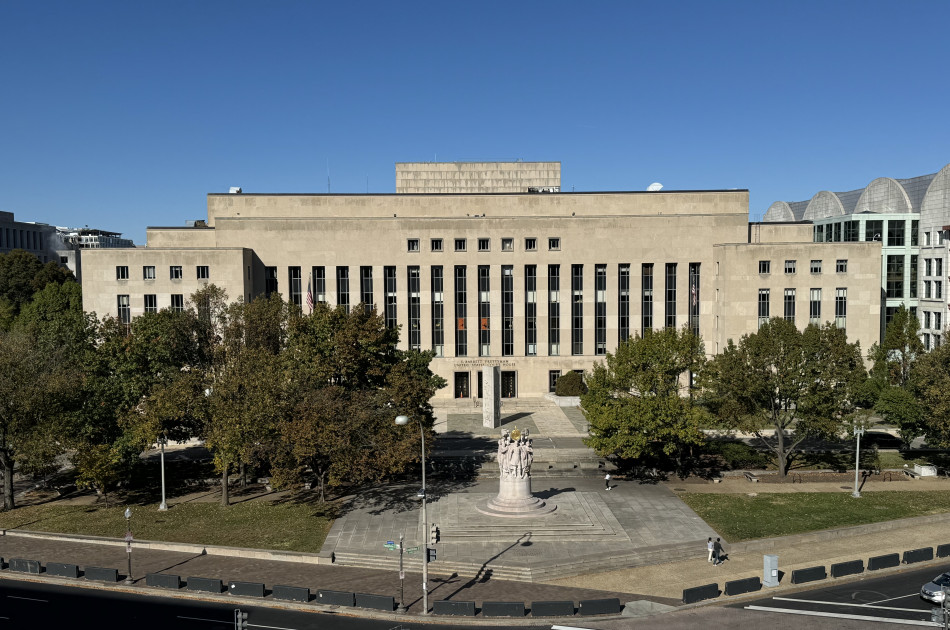
Why Boasberg? The Burden of the Chief Judge
So why does Boasberg seem to be everywhere? Part of the answer lies in his role as Chief Judge. In this administrative capacity, he often handles initial emergency motions or sensitive matters before they are fully assigned.
Furthermore, the longevity of the Venezuelan deportation case—J.G.G. v. Trump—has kept him in the headlines for months. This single, complex case involves profound constitutional questions about the Alien Enemies Act of 1798 and the executive branch’s defiance of a court order. It is not that Boasberg has more cases; it is that he has one of the most constitutionally significant cases of the modern era.

The Danger of Personalizing the Law
The attacks on Judge Boasberg are a symptom of a dangerous trend: the personalization of the judiciary. In a healthy republic, a judge’s rulings are debated on their legal merits. In our current climate, the judge themselves becomes the target.
When political leaders encourage the public to view a judge not as an impartial arbiter, but as a political enemy “hoarding” cases, they erode faith in the rule of law. The reality of the randomized docket is far less exciting than a conspiracy theory, but it is a crucial safeguard of our system. Judge Boasberg is not a “rogue” actor; he is simply the judge whose number came up in the lottery of American justice.