You think you are debating a neighbor about tax policy or reading a firsthand account from a war zone. But a simple software update has just pulled back the curtain on a massive, global masquerade ball. The reality of who is actually shaping American discourse is far more disturbing, and geographically distant, than we dared to imagine.
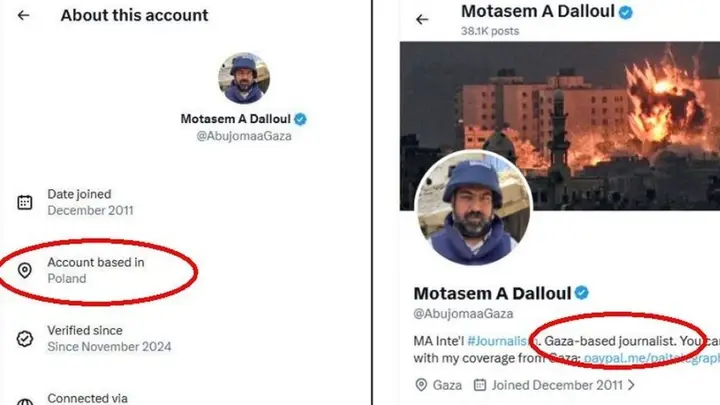
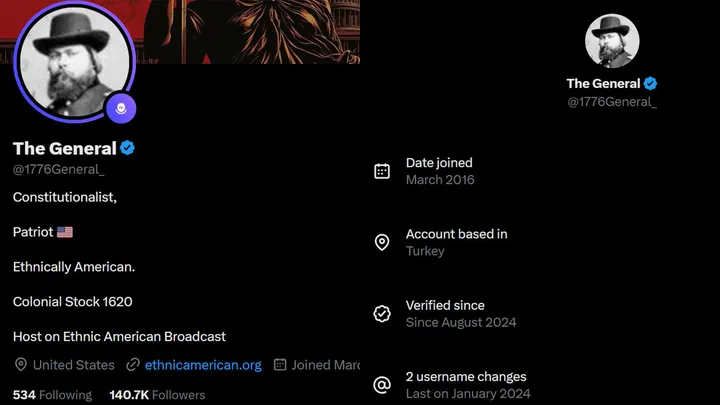
A new feature on the social media platform X, which displays the primary location of an account, has instantly exposed a legion of frauds.
Accounts posing as “America First” patriots and “boots-on-the-ground” journalists in Gaza have been unmasked as operators located in foreign nations, revealing a digital landscape teeming with imposters.
Discussion
Well, this is a wake-up call! We need to guard our digital borders just as fiercely as our physical ones. Our Founding Fathers valued free speech, but they also knew foreign influence can undermine democracy. Let's focus on protecting our sovereignty through law and vigilance.
Leave a Comment
Leave a Comment
Who Was Behind the Mask?
The revelations were swift and undeniable. Profiles that had spent months or years curating the image of concerned U.S. citizens—using flags in their bios and tweeting about local politics—were suddenly tagged with locations like Iran, Russia, or Brazil.
Similarly, accounts claiming to be independent journalists reporting live from the devastation in Gaza were revealed to be posting from entirely different continents. This was not a glitch; it was the collapse of a sophisticated disinformation architecture. These accounts were not merely sharing opinions; they were constructing false identities to manipulate the emotional and political reactions of real Americans.
Does the First Amendment Protect a Foreign Bot?
This exposure forces a confrontation with a difficult constitutional question regarding the boundaries of free speech. The First Amendment protects the right of Americans to speak anonymously and to use pen names—a tradition dating back to the Federalist Papers, written under the pseudonym “Publius.”
However, the Constitution does not grant foreign powers the right to engage in fraudulent impersonation to manipulate our domestic politics.
“It is a fundamental principle of our government that foreign influence is one of the most baneful foes of republican government,” Alexander Hamilton warned.
When a foreign operative pretends to be an American voter to sow discord, they are not exercising free speech; they are engaging in information warfare. The Supreme Court has upheld bans on foreign contributions to U.S. campaigns (in Bluman v. FEC), affirming that the American political community has a right to define itself and exclude foreign interference.
Can the “Marketplace of Ideas” Survive Counterfeit Currency?
Our theory of free speech relies on the “marketplace of ideas”—the belief that in an open debate, truth will eventually win out. But what happens when the market is flooded with counterfeit currency?
When thousands of voices in the public square are actually manufactured fakes designed by foreign adversaries, the market creates a distorted reality. It artificially inflates division, manufactures outrage, and makes consensus impossible because the “citizens” arguing are not real.
What is the Solution to Digital Fraud?
X’s decision to reveal location data is a market-based solution to a transparency problem, but it highlights a gap in our laws. We have strict laws against impersonating a police officer or a federal agent because of the authority those roles carry.
We currently have few effective tools to stop the industrial-scale impersonation of the American voter. As we move deeper into an era of AI-generated content and state-sponsored troll farms, the republic faces a test: Can we preserve the anonymity that protects dissidents while rooting out the fraud that empowers our enemies? The unmasking of these accounts is a warning that the “public square” is currently occupied by a silent, foreign army.
Does the First Amendment Protect a Foreign Bot?
This exposure forces a confrontation with a difficult constitutional question regarding the boundaries of free speech. The First Amendment protects the right of Americans to speak anonymously and to use pen names—a tradition dating back to the Federalist Papers, written under the pseudonym “Publius.”
However, the Constitution does not grant foreign powers the right to engage in fraudulent impersonation to manipulate our domestic politics.
“It is a fundamental principle of our government that foreign influence is one of the most baneful foes of republican government,” Alexander Hamilton warned.
When a foreign operative pretends to be an American voter to sow discord, they are not exercising free speech; they are engaging in information warfare. The Supreme Court has upheld bans on foreign contributions to U.S. campaigns (in Bluman v. FEC), affirming that the American political community has a right to define itself and exclude foreign interference.
Can the “Marketplace of Ideas” Survive Counterfeit Currency?
Our theory of free speech relies on the “marketplace of ideas”—the belief that in an open debate, truth will eventually win out. But what happens when the market is flooded with counterfeit currency?
When thousands of voices in the public square are actually manufactured fakes designed by foreign adversaries, the market creates a distorted reality. It artificially inflates division, manufactures outrage, and makes consensus impossible because the “citizens” arguing are not real.
What is the Solution to Digital Fraud?
X’s decision to reveal location data is a market-based solution to a transparency problem, but it highlights a gap in our laws. We have strict laws against impersonating a police officer or a federal agent because of the authority those roles carry.
We currently have few effective tools to stop the industrial-scale impersonation of the American voter. As we move deeper into an era of AI-generated content and state-sponsored troll farms, the republic faces a test: Can we preserve the anonymity that protects dissidents while rooting out the fraud that empowers our enemies? The unmasking of these accounts is a warning that the “public square” is currently occupied by a silent, foreign army.
Can't trust anything but Trump! Fake news everywhere trying to control our minds! 💯