
It has been a rough week for two of President Trump’s most prominent cabinet secretaries. In separate but related events, both tried to flex the immense power of the executive branch.
And in both cases, they were met with a simple, unified, and stunningly effective response: No.
The widespread refusal by the nation’s airports to air a partisan video, and the collective defiance of the nation’s news media against a restrictive new press policy, are more than just political setbacks for the administration. They are a powerful, real-world lesson in the limits of government power and the resilience of our constitutional system.
The Week of ‘No’
- What’s Happening: Two of President Trump’s cabinet secretaries – DHS Secretary Kristi Noem and Defense Secretary Pete Hegseth – have seen their new directives rejected by outside groups.
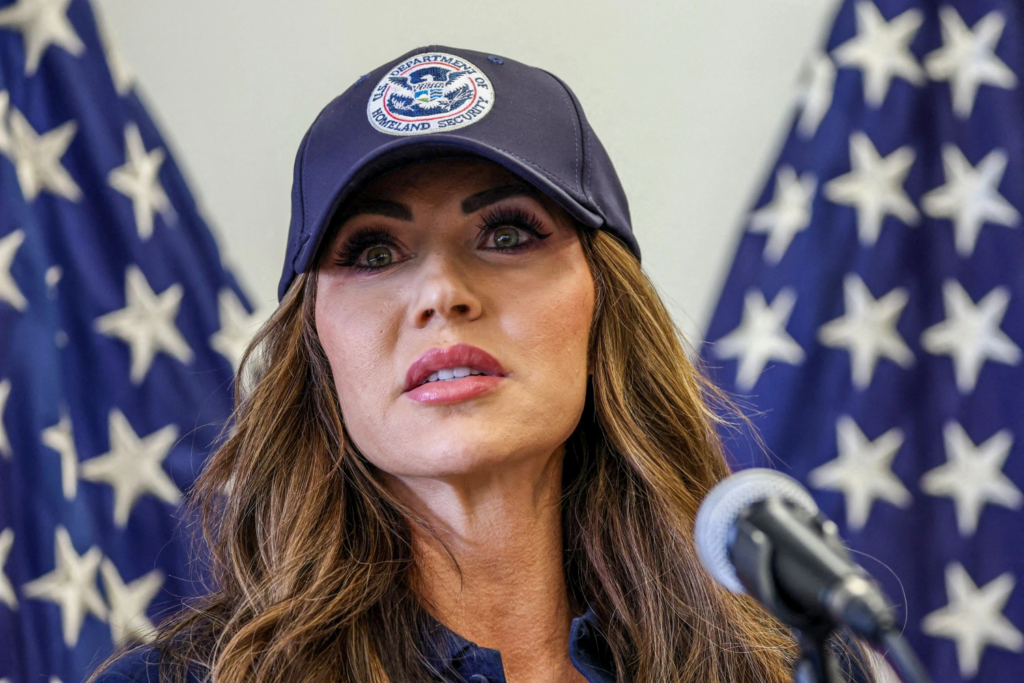
- The Noem Directive: She produced a video to be played at TSA checkpoints nationwide, blaming Democrats for the ongoing government shutdown. Major airports across the country refused to air it, citing policies against partisan messaging.
- The Hegseth Directive: He issued a new rule requiring Pentagon journalists to sign a pledge not to seek unauthorized information or risk losing their press credentials. An unprecedented coalition of news outlets – from Fox News and Newsmax to The New York Times and CNN – jointly refused to sign.
- The Constitutional Issue: These events are a major test of the First Amendment, pitting the executive branch’s messaging against the principles of free press and the prohibition on compelled political speech. They also highlight the power of federalism and the role of the press as a check on government.
The Grounding of ‘Homeland Barbie’
As the government shutdown drags on, the administration has launched an aggressive campaign to blame Democrats. The most audacious move came from Homeland Security Secretary Kristi Noem, who ordered a video of herself blaming “the radical left” to be played on screens at airport TSA checkpoints.
The pushback was swift and decisive. Airport authorities in Los Angeles, Seattle, Charlotte, and a host of other cities announced they would not play the video. They argued that their facilities are public spaces, not platforms for partisan political advertising, and that airing the video would violate their own policies and, in some cases, state and local laws.
This is federalism in action – a check on federal power not from the courts, but from the local entities that run our nation’s critical infrastructure.
The Press’s United Front
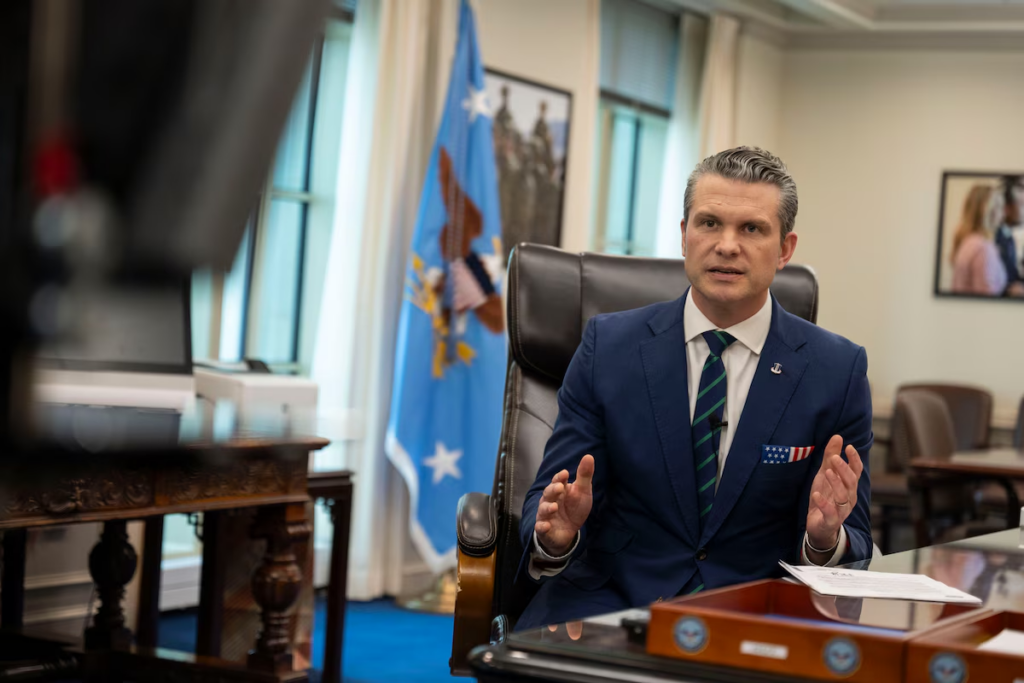
At the same time, Defense Secretary Pete Hegseth was facing his own rebellion. He announced a dramatic change to the rules for journalists covering the Pentagon, requiring them to sign a pledge not to seek out or report on any information – even unclassified material – that has not been officially authorized for release.
He framed the new rule as “common sense” to protect national security.
“If they sign onto the credentialing, they’re not going to try to get soldiers to break the law by giving them classified information. So it’s commonsense stuff, Mr. President.” – Defense Secretary Pete Hegseth
The nation’s press corps, however, saw it as an unconstitutional gag order. In an almost unheard-of display of unity, the country’s largest and most ideologically diverse news organizations – including Fox News, The Wall Street Journal, The Associated Press, and Newsmax – signed a joint statement refusing to abide by the new rules, which they called “without precedent” and a threat to “core journalistic protections.”
The Constitutional Power of Refusal
These two stories are a powerful lesson in the separation of powers and the First Amendment.
Secretary Hegseth’s new press policy was a direct challenge to freedom of the press. It was an attempt to impose a “prior restraint” – forcing journalists to agree to limit their reporting before being granted access. This is one of the most disfavored forms of government control over speech, as the press’s constitutional role is to be a watchdog on the government, not its stenographer. The media’s collective “no” was an assertion of its constitutional independence.
Secretary Noem’s video, meanwhile, ran into a different First Amendment problem. The government cannot compel private or semi-private entities like airport authorities to broadcast its political messaging. The airports’ refusal was a defense of their right to control their own property and to remain non-partisan.
These weren’t court rulings or acts of Congress. They were simple but powerful acts of refusal from local governments and a free press, demonstrating that the Constitution’s checks on power are not just found in Washington.
A System of Checks, Both Big and Small
The events of this week are a vital and reassuring reminder that the American system of government has more checks and balances than just the three branches in Washington.
The power of the executive branch, while immense, is not absolute. It can be checked by the courts and by Congress, but it can also be checked by a local airport authority in Buffalo, an editor at Newsmax, and the simple, powerful, and constitutionally protected act of saying “no.”