
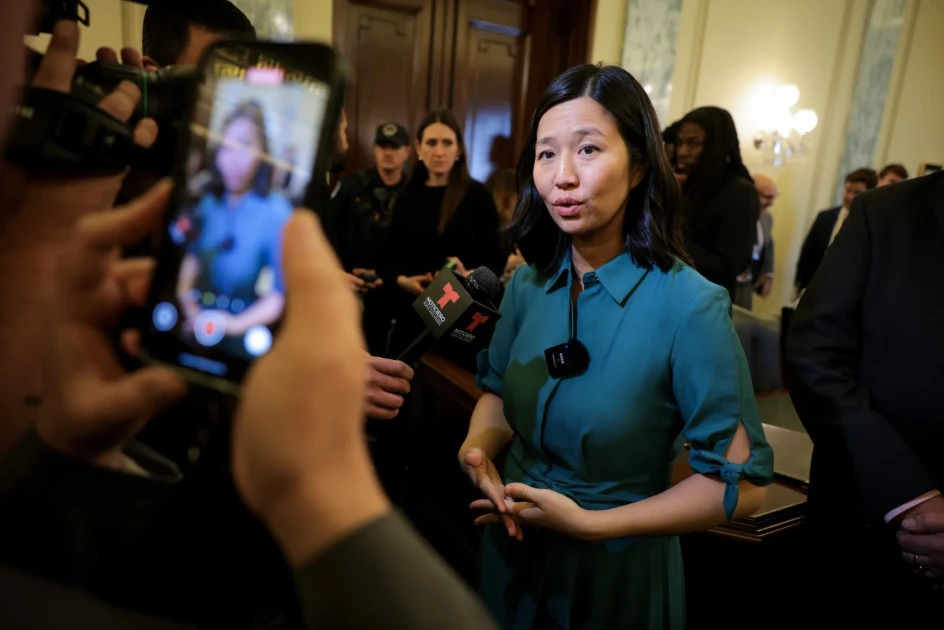
Invoking the spirit of the American Revolution just across the street from Boston’s historic Faneuil Hall, Mayor Michelle Wu has issued a fiery and defiant rebuke to the U.S. Attorney General.
Her press conference on Tuesday was a direct response to a new, aggressive push by the Trump administration to force so-called “sanctuary cities” to cooperate with federal immigration enforcement.
The escalating war of words – involving threats from Washington and historical taunts from city leaders – is the opening salvo in what is shaping up to be a profound constitutional battle over the very nature of federalism and the limits of Washington’s power.
At a Glance: The Sanctuary City Standoff
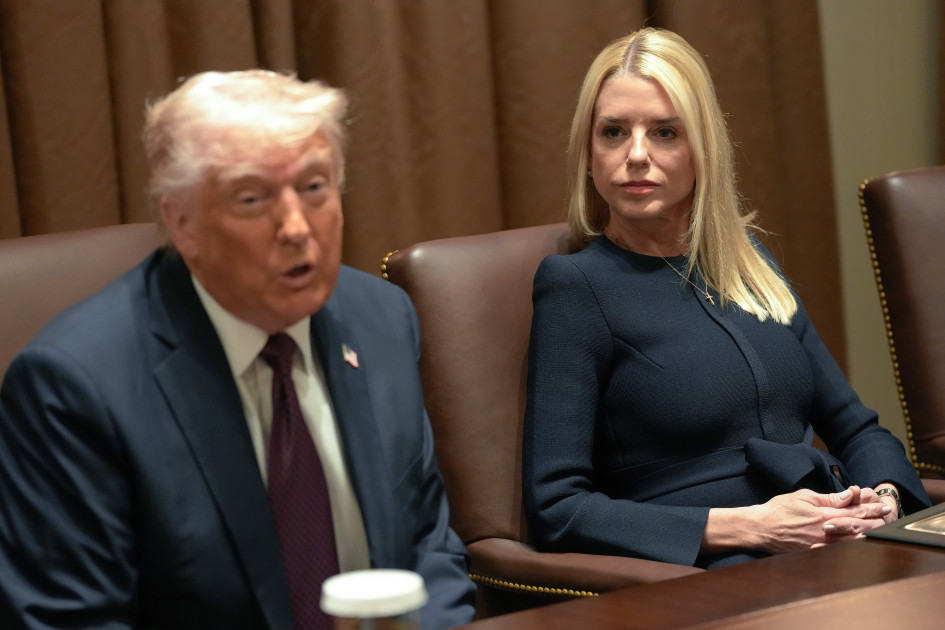
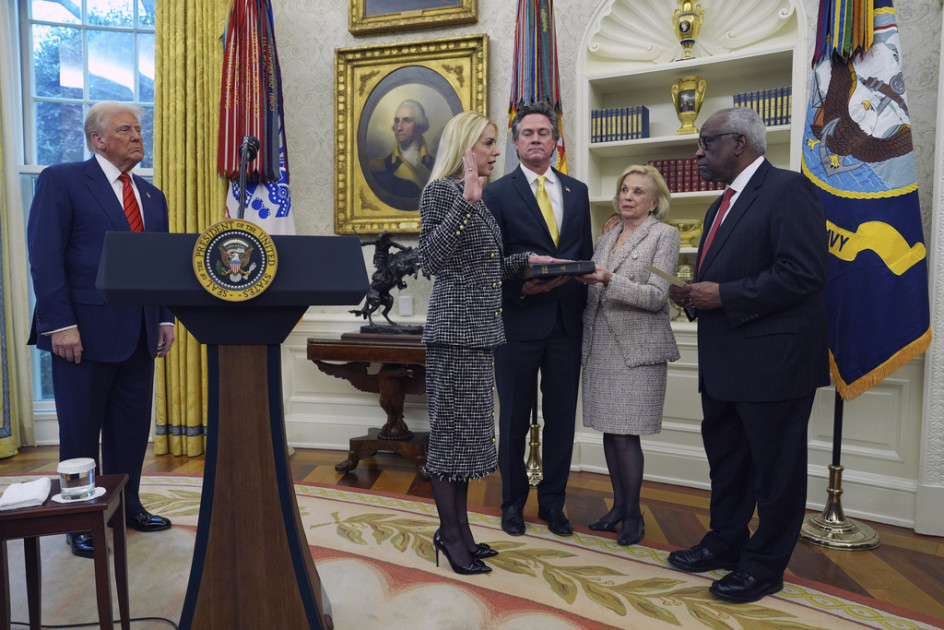
- What’s Happening: The Trump DOJ, led by AG Pam Bondi, has sent letters to “sanctuary” cities and states, threatening to sue or cut federal funds if they don’t cooperate with ICE.
- The Response: Leaders from Boston, Washington state, and Connecticut have issued defiant responses, vowing not to change their policies.
- Boston’s Mayor Michelle Wu: Invoked the American Revolution, telling the DOJ to “stop attacking our cities” and declaring “you are wrong on the law.”
- The Constitutional Issue: A major Federalism battle pitting the federal government’s power over immigration against the states’ Tenth Amendment rights and the powerful “anti-commandeering” doctrine.
A Warning from Washington
The conflict began when Attorney General Pam Bondi sent letters to a number of jurisdictions with “sanctuary” policies, which generally limit how much local law enforcement can cooperate with federal immigration agents.
The letters warned that these policies may be illegal and threatened lawsuits or a cutoff of federal funding.
The response from these largely Democratic-led cities and states has been swift and unified.
Boston Mayor Michelle Wu held a press conference to verbally deliver her response to Bondi. “Stop attacking our cities to hide your administration’s failures,” she said. “Unlike the Trump administration, Boston follows the law… You are wrong on the law, and you are wrong on safety.”
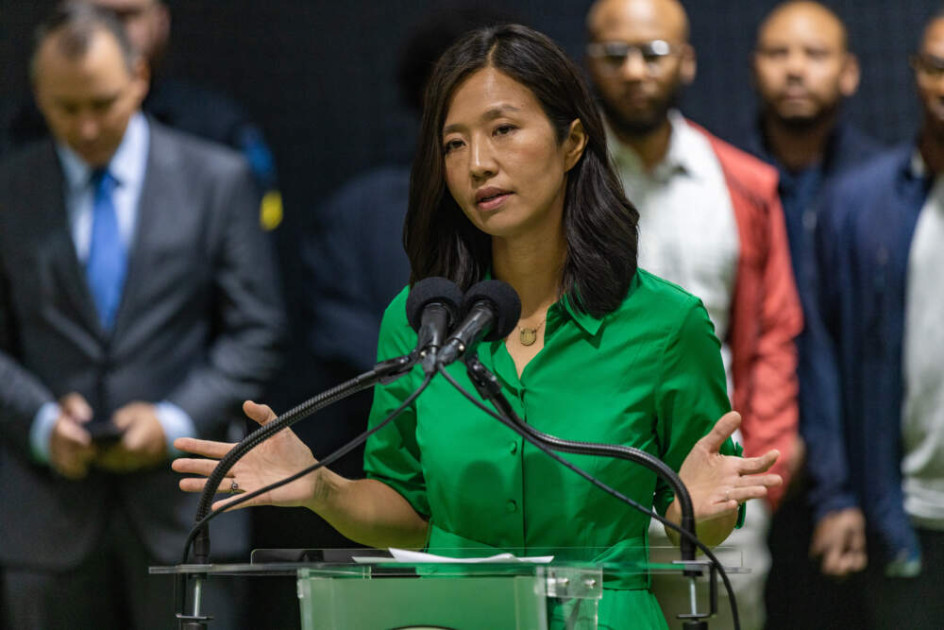
Leaders in Washington state and Connecticut issued similar statements, vowing to defend their “sovereignty” and refusing to change their “values in the face of threats from the Trump administration.”
The Constitutional Firewall: The Tenth Amendment
At the heart of the cities’ defiance is a powerful constitutional principle rooted in the Tenth Amendment: the “anti-commandeering” doctrine.
The Tenth Amendment reserves all powers not delegated to the federal government for the states. One of these core state powers is local law enforcement.
In a landmark 1997 case, Printz v. United States, the Supreme Court established the anti-commandeering doctrine, ruling that the federal government cannot “commandeer” state and local officials to enforce federal law. Washington can’t force a local sheriff in Montana to conduct federal background checks, and, the cities argue, it can’t force a Boston police officer to act as a federal immigration agent.
At the heart of the cities’ defiance is a powerful Supreme Court doctrine known as ‘anti-commandeering,’ which says the federal government cannot force state and local employees to enforce federal law.
The cities contend that their policies are not obstructing federal agents – which would be illegal – but simply refusing to assist them, which they argue is their constitutional right.
The Power of the Purse and the Supremacy Clause
The Trump administration’s legal argument rests on two other powerful constitutional principles.
First is the Supremacy Clause, which holds that federal law is the supreme law of the land. The DOJ argues that federal immigration law trumps any state or local policy, and that sanctuary policies which forbid communication with ICE actively obstruct federal law.
Second is the Spending Clause, which gives Congress the “power of the purse.” The administration is threatening to use this power to withhold federal funds from non-compliant jurisdictions. However, the Supreme Court has also placed limits on this power, ruling that the federal government cannot use the threat of withholding funds in a way that is unconstitutionally “coercive.”
A Test of Sovereignty
This conflict is more than just a policy disagreement; it is a fundamental dispute over sovereignty.
The sanctuary jurisdictions are asserting their Tenth Amendment right to set their own local law enforcement priorities and to decide how their taxpayer-funded resources are used. The federal government is asserting its supreme and exclusive authority over immigration.
The coming lawsuits will force the courts – and likely the Supreme Court – to once again draw the contentious line between federal power and states’ rights. The battle that began in Boston’s Faneuil Hall centuries ago over the limits of a powerful central government is now being fought anew in courtrooms across the country.