
The leader of a war-torn nation, flanked by the heads of Europe’s greatest powers, has come to the White House – not just to ask for help, but to resist pressure from his most powerful ally.
President Donald Trump, fresh off his summit with Vladimir Putin, is pushing for a swift end to the war in Ukraine. But his proposed “land for peace” deal is colliding with a wall of competing demands from Kyiv, Europe, and a surprisingly unified U.S. Congress.
The high-stakes meeting is more than just a peace talk. It is a complex constitutional ballet, testing the limits of presidential power against the realities of international alliances and the will of the legislature.
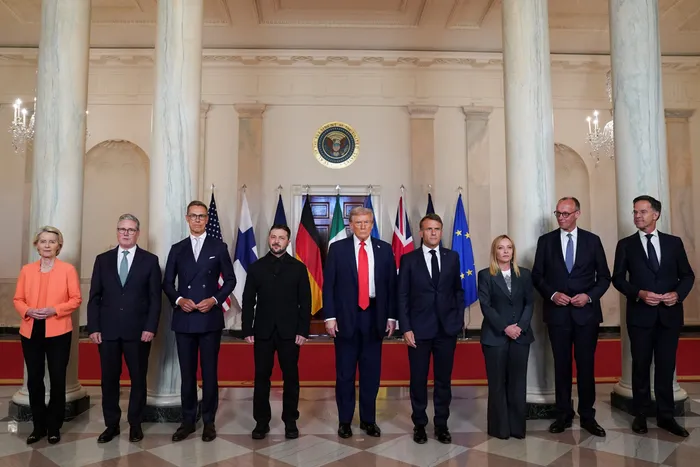
At a Glance: The White House Peace Summit
- What’s Happening: President Trump is hosting Ukrainian President Volodymyr Zelenskyy and key European leaders at the White House.
- The Goal: To pressure Ukraine into accepting a “land for peace” deal with Russia.
- The Key Conflicts: Zelenskyy is demanding security guarantees, European allies are demanding a ceasefire, Russia is rejecting peacekeepers, and the U.S. Congress is threatening new sanctions.
- The Constitutional Issue: A major test of the President’s foreign policy power under Article II versus the checks and balances provided by Congress’s power of the purse and the Senate’s treaty power.
A Summit of Conflicting Demands
Monday’s meeting at the White House has laid bare the immense chasm between what the different parties want in order to end the war.
President Trump, operating as a dealmaker, is pushing for a quick settlement that would likely involve Ukraine ceding the territory Russia currently occupies. He has also dismissed the need for a ceasefire to be in place before a deal is reached.
President Zelenskyy, in contrast, is focused on the future. His primary demand is not about territory, but about ironclad “security guarantees” from the U.S. and Europe to prevent Russia from ever invading again.
European Leaders, represented by figures like German Chancellor Friedrich Merz, are pushing back against Trump, insisting that a ceasefire from Russia is a non-negotiable first step for any serious negotiations.
And Russia, from afar, has already rejected a key component of a potential peace deal, calling the idea of a NATO-style peacekeeping force “categorically” unacceptable.
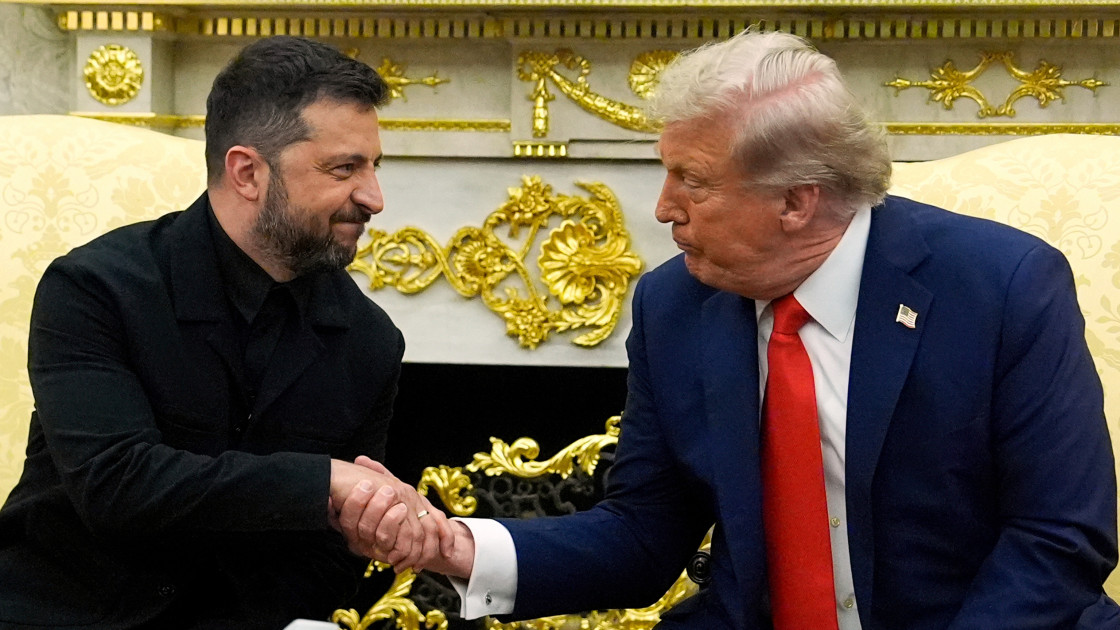
The Constitutional Power to Make Peace
This entire drama is a powerful display of the President’s constitutional role as chief diplomat. Under Article II, the President has the primary authority to negotiate with foreign leaders and set the course for American foreign policy.
However, the events of the last 24 hours have been a stark reminder that this power is not absolute. The U.S. Congress is making its own voice heard loud and clear.
“The President can offer a peace plan, but Congress holds the economic stick. The threat of new sanctions is a powerful reminder that the legislative branch has its own voice in foreign policy.”
Both Republicans and Democrats in the Senate are sending a unified message. Senate Majority Leader John Thune has said the Senate is ready to provide “economic leverage” to keep Russia at the table. Democrats like Senator Jeanne Shaheen, along with hawkish Republicans like Senator Lindsey Graham, are threatening to pass “crushing sanctions” against Russia – and even its enablers like China – if a “just” peace is not achieved.
This is a direct exercise of Congress’s “power of the purse” and its authority over foreign commerce – a powerful constitutional check on the President’s diplomatic agenda.
The Ultimate Check: A Treaty
Beyond sanctions, any long-term “security guarantee” for Ukraine of the kind Zelenskyy is demanding would face a massive constitutional hurdle: the Treaty Clause.
A formal, binding promise to defend another nation is a treaty. Under the Constitution, it would require the “Advice and Consent” of a two-thirds supermajority in the U.S. Senate to be ratified.
The President can make a promise, but only the Senate can make it a binding, multi-generational commitment.
The Weight of Alliances
President Trump is attempting to use his personal, executive-driven style of diplomacy to solve a massive international crisis. However, he is being confronted by a web of competing interests and constitutional constraints.
His Ukrainian and European allies have their own non-negotiable demands. The U.S. Congress is making it clear that it will use its own constitutional powers to ensure any deal is not seen as a capitulation.
This summit is a powerful lesson that while the American President is the most powerful person in the world, he does not act in a vacuum. The path to a real, lasting peace will have to run not just through the White House, but through Kyiv, Berlin, and the halls of the U.S. Senate.