
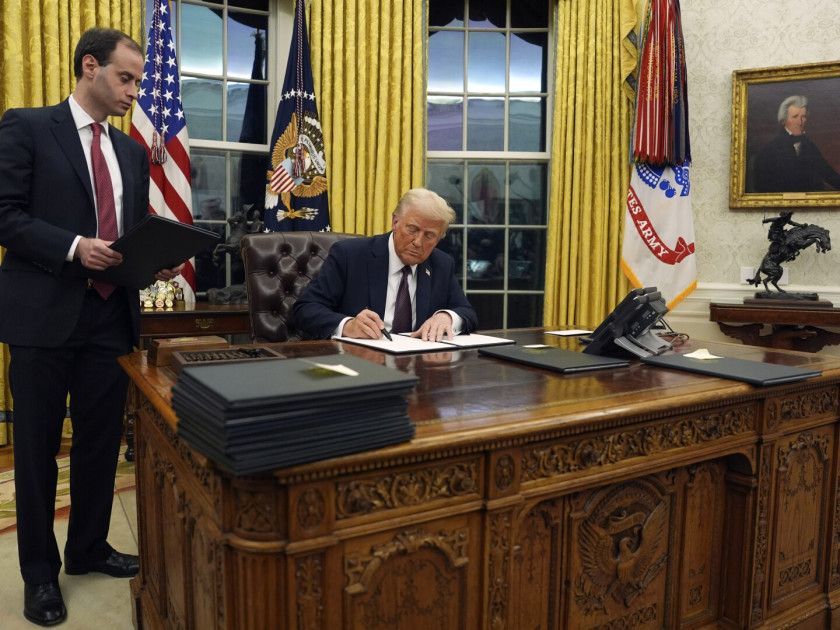
With no ceremony, no press conference, and no written explanation, President Trump has revoked a sweeping executive order that launched 72 different federal initiatives to promote competition in the American economy. This quiet act is one of the most significant, if least noticed, policy reversals of his new term.
This is not a minor administrative change. It is a profound philosophical pivot in the federal government’s relationship with corporate power, with direct consequences for every American. This single revocation ends efforts to lower the price of everything from hearing aids to airline tickets, and it raises fundamental questions about the government’s constitutional role in regulating our economy.
Discussion
I'm okay with it
Glad Trump's back! No more of Biden's nonsense regs that just strangle our economy and limit freedom. We need less gov control, and more free market. The Dems wanna tie everything up with red tape. MAGA means standing up for the people, not the elites!
Free markets, less government interference!
Finally some common sense from Trump! Biden's so-called "competition" rules were just sneaky ways to control businesses and meddle in markets. Let the free market decide! Less regulation means more freedom for businesses and consumers, and that's what real Americans want. MAGA! 🇺🇸
I trust our president to do the right thing the weak liberal scum media never have a good word to say about his administration
Leave a Comment
Leave a Comment
A Policy Shift with Personal Consequences
For the average American, the 2021 competition order was not an abstract document. It was a “whole-of-government” effort that directed agencies to tackle concrete, everyday issues that affect family budgets and workers’ rights. The President’s quiet reversal brings an end to a wide range of these initiatives, including:
- Efforts to allow hearing aids to be sold over-the-counter, a move designed to drastically lower their cost.
- Rules to make it easier for airline passengers to get refunds for issues like broken Wi-Fi or mishandled bags.
- A push to ban or limit non-compete agreements, which trap millions of workers in their jobs and suppress wages.
- A guarantee of the “right to repair,” allowing farmers, motorists, and everyday consumers to fix their own tractors and iPhones without voiding warranties.
- Protections for farmers to sue large slaughterhouses that engage in unfair pricing.
A Tale of Two Antitrust Philosophies
This reversal is the latest chapter in a century-long constitutional and economic debate. The power of the federal government to regulate markets is rooted in the Constitution’s Commerce Clause, which gives Congress the authority to pass laws like the Sherman Antitrust Act to prevent monopolies. The core debate is about how aggressively that power should be used.
The now-revoked Biden order was a champion of the “anti-monopoly” tradition. This view, promoted by figures like FTC Chair Lina Khan and Senator Elizabeth Warren, argues that concentrated corporate power is a threat not just to consumer prices, but to workers’ wages, small businesses, innovation, and even democracy itself. It calls for an aggressive, “whole-of-government” approach to break up monopolies and promote competition.
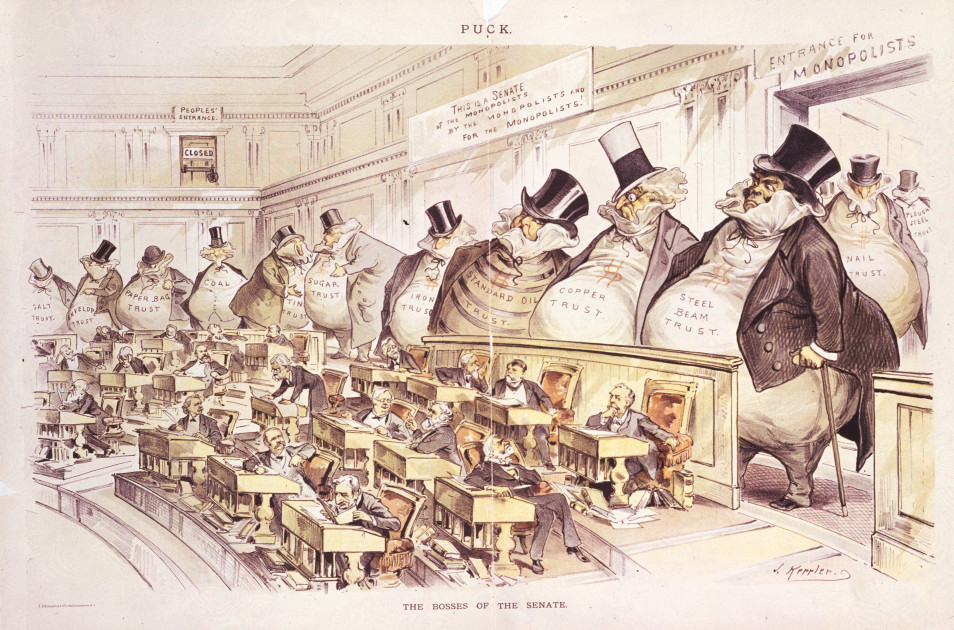
The Trump administration’s action signals a clear return to the “consumer welfare” standard that has dominated antitrust policy since the 1980s. This more hands-off philosophy argues that government should only intervene when it can prove that corporate consolidation is causing direct and measurable harm to consumers in the form of higher prices.
The Power of the Presidential Pen
This entire policy reversal – affecting dozens of agencies and impacting everything from agriculture to Big Tech – was accomplished without a single vote in Congress. It is a stark illustration of the immense power of the modern presidency to set the nation’s entire regulatory agenda.
President Biden used his Article II executive power to launch a broad assault on corporate consolidation. President Trump has now used that same power to call it all off. This demonstrates how a new president, on his own authority, can fundamentally alter the government’s relationship with the economy.
The quiet revocation of this order is a momentous event. It represents a clear choice in a long-running constitutional and economic debate, signaling a return to a more laissez-faire approach to corporate power. The long-term consequences of this choice – for workers, consumers, small businesses, and the health of our competitive markets – will be the subject of intense debate for years to come.
It's important to remember our roots in the Constitution and balance power. While I’m generally supportive of reducing government overreach, this repeal demands careful scrutiny. Protecting Main Street from monopolistic giants is crucial. We must ensure law and order prevails in safeguarding fair competition.