
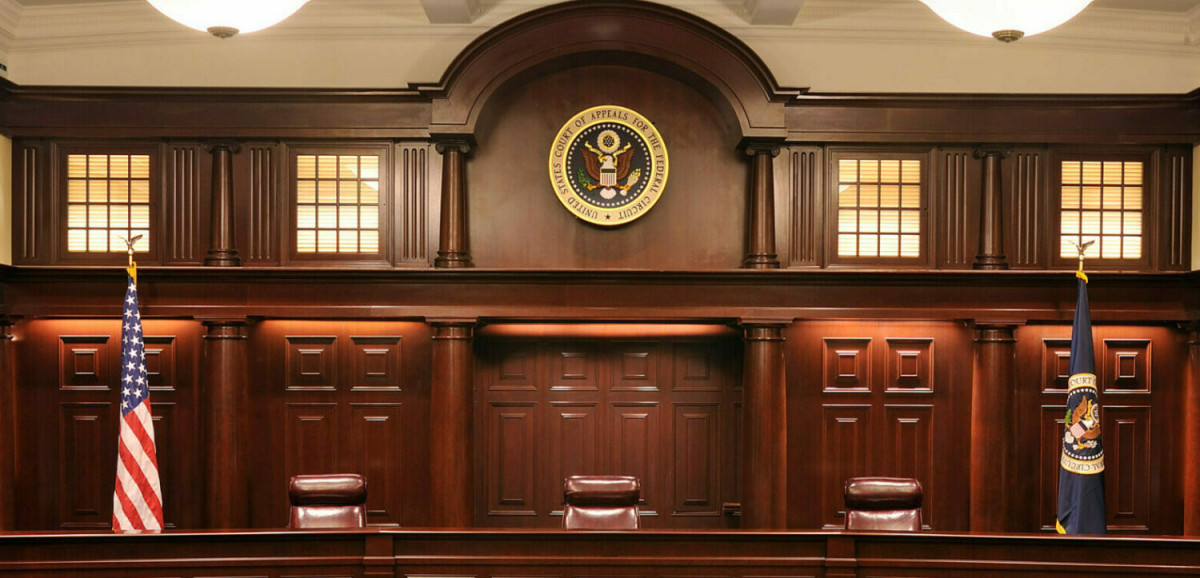
In a federal appeals court on Thursday, a panel of eleven judges grilled the Trump administration over the legality of its sweeping “Liberation Day” tariffs, slated to take effect on August 1st. While the case is about import fees, the true issue at stake is far more profound. The hearing has become a fundamental test of the separation of powers and whether a president can use a broad emergency law to seize one of Congress’s most explicit constitutional powers—the power to tax and regulate foreign trade.
The administration’s argument rests on a “breathtaking claim to power,” as one lawyer put it. It is a claim that forces us to ask a critical question: What are the limits on a president’s power during a self-declared “emergency,” and can the judiciary still act as a check on that power?
A Law Designed to Constrain, Used to Unleash
At the heart of this constitutional conflict is the International Emergency Economic Powers Act (IEEPA). To understand the gravity of the situation, one must understand the history of this law. Congress passed IEEPA in 1977 not to expand, but to limit the president’s power, replacing the nearly blank check of the old Trading with the Enemy Act. It was a post-Watergate, post-Vietnam reform designed to rein in the “imperial presidency.”
The Trump administration is now attempting to turn this law on its head. It argues that the decades-long U.S. trade deficit has reached a “tipping point,” creating an “unusual and extraordinary threat” to national security. This threat, they claim, is an emergency that unlocks the President’s authority under IEEPA to impose tariffs on the entire world by decree. This is a radical reinterpretation, using a law designed to constrain presidential power as a justification for its vast expansion.
The Missing Word: “Tariffs”
During the hearing, the judges repeatedly pressed the administration on a simple, glaring problem with its legal argument. As Judge Evan Wallach pointed out, when Congress passed IEEPA, it simultaneously passed other, more specific laws that do deal with tariffs. The emergency powers law, however, “doesn’t include the word tariffs anywhere.”
This is the central flaw in the administration’s case. It appears to be ignoring the specific, detailed, and limited tariff laws Congress has actually written, in favor of a broad, vague emergency power that gives the President maximum discretion with minimal congressional oversight. This is not just a technical legal choice; it is a choice that reflects a clear preference for unilateral executive power over the deliberative, and often constraining, constitutional process that belongs to Congress.
The Threat to Judicial Review
The most constitutionally alarming moment of the hearing came when the administration’s lawyer was pressed on whether the President’s power under IEEPA is “unbounded” and reviewable by the courts. The lawyer’s suggestion that the administration should only have to answer to Congress, not the judiciary, was met with what one attendee described as “laughter in the room.”
This is no laughing matter. It is a direct challenge to the principle of judicial review established in Marbury v. Madison. The idea that a President can declare an emergency and then act with an authority that the courts cannot even examine is a rejection of the judiciary’s role as a co-equal branch of government. It is a claim to power that is fundamentally at odds with our constitutional system of checks and balances.
While American businesses and consumers wait in a state of “complete uncertainty” for a ruling, the constitutional stakes of this case are already crystal clear. This is about more than tariffs; it is a battle over the definition of an “emergency.” If a long-standing economic problem can be declared an emergency that unlocks nearly unlimited and unreviewable presidential power, then the limits on executive authority enshrined in our Constitution have been dangerously eroded.