
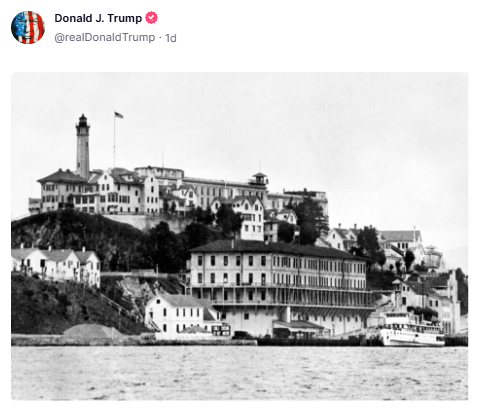
President Donald Trump stunned the nation on May 4, 2025, announcing plans to reopen Alcatraz, the infamous San Francisco Bay prison shuttered since 1963, to house “America’s most ruthless and violent offenders.”
In a Truth Social post, Trump directed the Bureau of Prisons, DOJ, FBI, and Homeland Security to rebuild and expand the facility, a move Attorney General Pam Bondi claims will yield “cost savings” by deterring crime.
Critics, however, slam the proposal as an impractical, costly distraction, raising constitutional concerns about due process and executive overreach.
How We Got Here
Trump’s announcement frames Alcatraz as a symbol of “Law, Order, and JUSTICE.” He argued that “vicious, violent, and repeat criminal offenders” have plagued America, and reopening the maximum-security prison—once home to gangsters like Al Capone—would isolate them.
Bondi suggested consolidating high-risk inmates at Alcatraz could streamline federal prison costs, claiming it aligns with Trump’s tough-on-crime agenda. The plan follows Trump’s clashes with courts over deportations, including a March 2025 attempt to send alleged gang members to El Salvador, which he linked to “radicalized judges” demanding due process.

The Bureau of Prisons, led by Director William K. Marshall III, pledged to assess needs and pursue Trump’s directive, but no timeline or budget was provided. California Democrats, including Rep. Nancy Pelosi, dismissed the idea as “not serious,” noting Alcatraz’s role as a National Park Service site drawing 1.4 million tourists yearly.
For Americans, the proposal raises questions about safety, costs, and whether it’s a genuine policy or political theater.
Rights vs. Executive Power
The Alcatraz plan engages core constitutional issues:
Fifth Amendment Due Process: Trump’s frustration with judges insisting on trials for deportees, echoed in his Alcatraz push, challenges the Fifth Amendment’s guarantee of due process for all persons. His March 2025 deportation of 200 alleged Venezuelan gang members without hearings, halted by a federal judge, suggests Alcatraz could be used to skirt legal protections, per The New Republic.
Article II Executive Authority: Trump’s order relies on Article II’s executive power to manage federal agencies like the Bureau of Prisons. However, redirecting Alcatraz from a National Historic Landmark, under the Department of the Interior, tests statutory limits, as the Antiquities Act of 1906 governs such sites.
Article I Spending Power: Congress controls federal funding under Article I, Section 8. Converting Alcatraz, estimated to cost $3-5 million in 1963 for basic restoration, could run into billions today, per prison historian Jolene Babyak.
Without congressional approval, Trump’s plan risks violating spending authority, per INS v. Chadha (1983).
These issues highlight a broader concern: Trump’s push for swift, unchecked action may clash with constitutional checks, affecting Americans’ trust in fair governance.
Feasibility and Fairness
The proposal invites scrutiny:
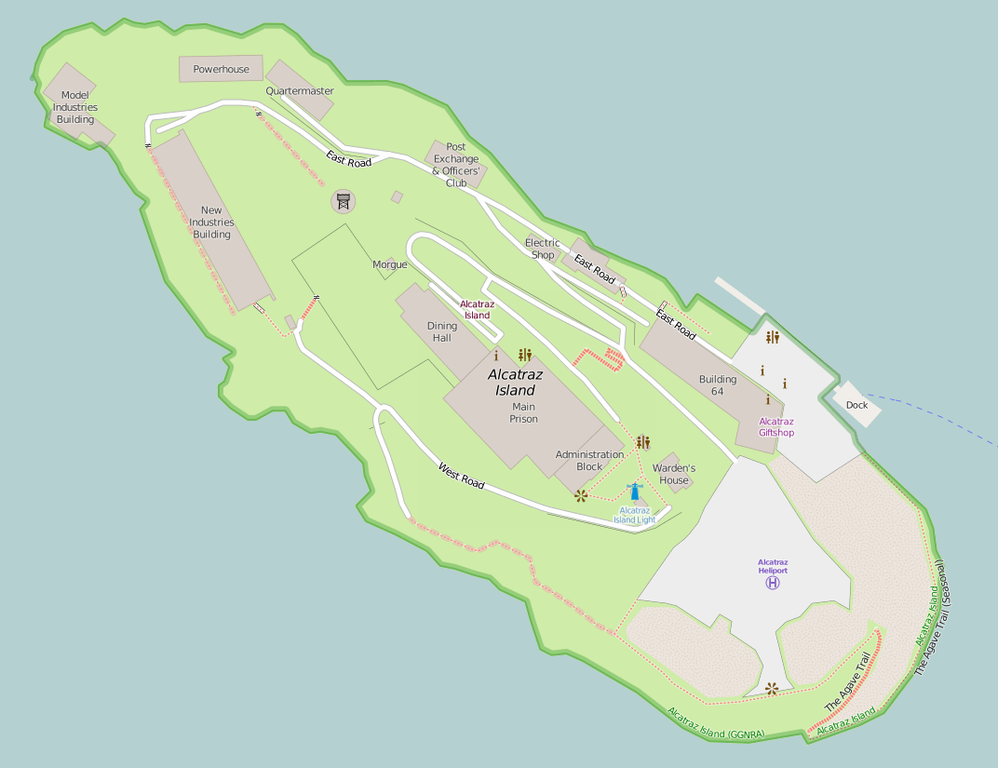
- Is it practical? Alcatraz, closed due to its $10 daily per-inmate cost—triple other prisons’ in 1959—lacks water, sewage, and heat, per historian John Martini. Modernizing it could cost billions, while the federal prison system, down 25% from peak capacity, has 30,000 empty beds, per UC Davis’s Gabriel Chin. Bondi’s “cost savings” claim lacks evidence, especially against $1.2 billion in annual tourism revenue.
- Does it violate due process? Trump’s rhetoric targeting “radicalized judges” and his history of bypassing trials, like the El Salvador deportations, suggest Alcatraz could house inmates without fair hearings, violating the Fifth Amendment. A 2025 SCOTUS order pausing such deportations underscores judicial pushback.
- Is it a distraction? Critics argue the plan diverts attention from Trump’s budget cuts, like $1 billion from anti-crime programs. With 16 existing high-security prisons, like Florence, Colorado, the need for Alcatraz is questionable, potentially serving as a symbolic stunt rather than a solution.
These questions cast doubt on the plan’s viability and alignment with constitutional principles, leaving Americans to weigh its intent versus its impact.
Everyday Impact: Safety, Costs, and Symbolism
The Alcatraz proposal affects Americans in tangible ways:
Public Safety: Trump’s focus on “ruthless” offenders taps into fears of crime, up 5% nationally from 2020-2023. Yet, with only 260-300 beds historically, Alcatraz wouldn’t dent the 150,000 federal inmate population, offering symbolic rather than practical relief.
Economic Burden: Converting a tourist site generating $1.2 billion yearly into a prison risks local jobs—San Francisco’s tourism employs 80,000. Construction costs, potentially $2 billion, could raise taxes or divert funds from schools or healthcare, hitting families’ budgets.
Community Trust: Trump’s narrative of judges enabling crime, coupled with Bondi’s cost-saving claims, fuels distrust in institutions. With 34% of Americans trusting the judiciary, down from 50% in 2020, this rhetoric could deepen divides, affecting civic cohesion.
For families, the plan offers a tough-on-crime promise but threatens economic strain and eroded rights, with little evidence it will reduce crime.

Policy or Performance?
Trump’s Alcatraz push aligns with his broader agenda—mass deportations, Guantanamo detentions, and foreign prison transfers—all facing legal hurdles. A March 2025 federal ruling against his Alien Enemies Act use and a 2024 SCOTUS pause on gang deportations show courts checking his power. Politically, the plan energizes Trump’s base, with 55% supporting stricter incarceration, but alienates moderates, with 62% favoring judicial independence, per recent polls.
California officials, like Sen. Scott Wiener, call it “unhinged,” warning of a “domestic gulag.”
Globally, the proposal signals a hardline U.S. stance, but its feasibility is dubious. Alcatraz’s crumbling infrastructure, corroded by salt air, and lack of water make it a “money pit,” per Martini. The Bureau of Prisons, already closing facilities due to budget cuts, faces staffing shortages, with 20% vacancy rates in 2024. Reopening Alcatraz could divert resources from modern prisons, undermining Trump’s own efficiency goals.
Trump’s Alcatraz plan, backed by Bondi’s optimistic cost claims, is a bold but fraught move. Constitutionally, it risks violating due process and congressional authority, with courts likely to intervene if detentions bypass trials. Practically, the billions needed to rebuild clash with the site’s tourism value and existing prison capacity, making it a questionable priority. For Americans, the promise of safety comes with higher taxes, fewer jobs, and potential rights erosions, while the plan’s symbolic weight may outweigh its impact.
The Bureau of Prisons’ assessment, due soon, will clarify costs and timelines, but without congressional funding, the plan may stall. As legal challenges mount—over 200 lawsuits already target Trump’s policies—Alcatraz could become another flashpoint in a polarized nation, testing whether “law and order” trumps constitutional fairness or sinks into a costly distraction.