
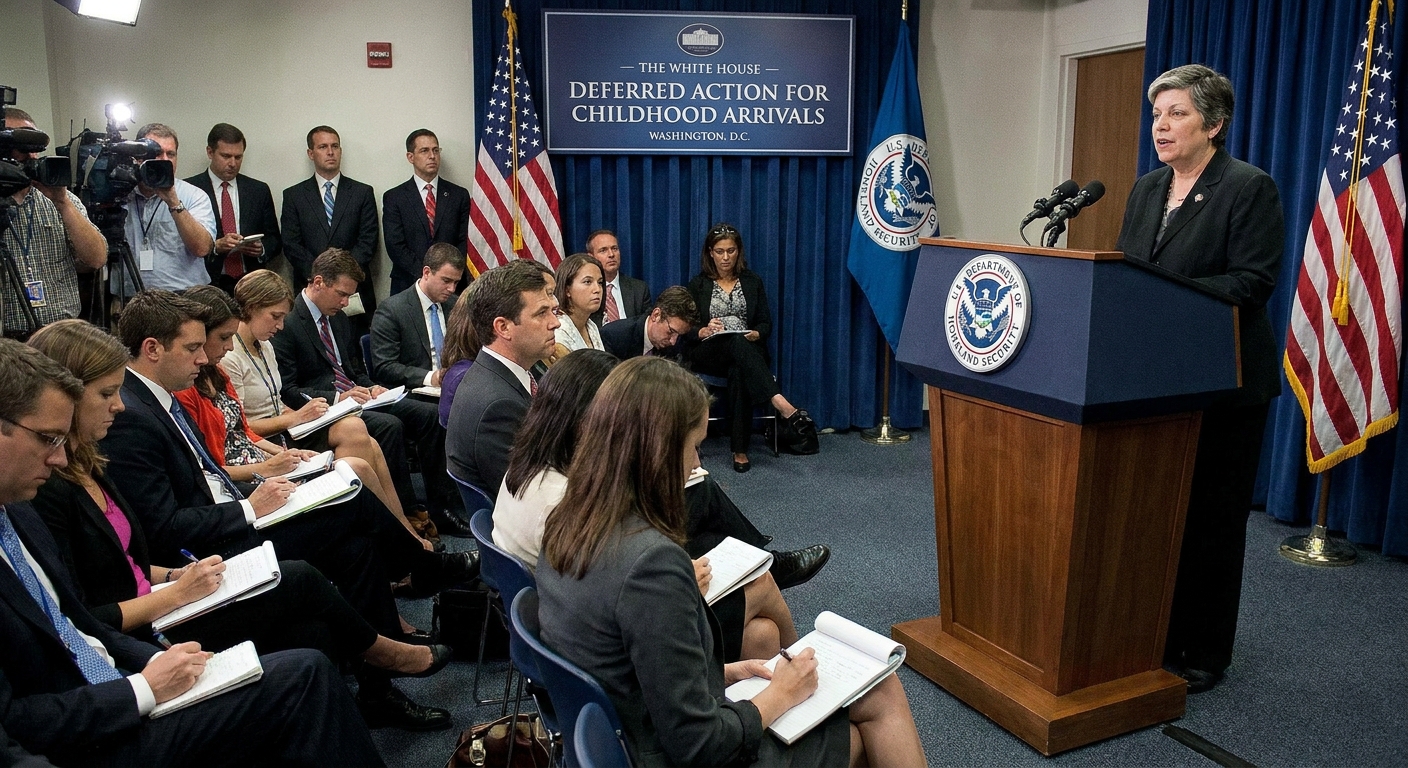
DACA is one of those policies that feels like a law because it shapes real lives, real workplaces, and real communities, but it is not a law Congress passed. It is an executive branch program created by the Department of Homeland Security in 2012 that tells immigration officials, in effect, “for certain people, we will temporarily pause deportation and let them apply for work authorization.”
That tension is the whole story: DACA sits at the intersection of immigration enforcement discretion and constitutional limits on executive power. It has protected large numbers of people from removal at various points in its history, yet it has also been repeatedly challenged in court precisely because it was built through executive action rather than legislation.
Join the Discussion
What DACA stands for
DACA stands for Deferred Action for Childhood Arrivals.
- Deferred action means the government decides, for a time, not to pursue deportation against a particular person.
- Childhood arrivals refers to people who were brought to the United States as children and grew up here.
DACA is administered by U.S. Citizenship and Immigration Services (USCIS), which is part of DHS.
What DACA does and does not do
What DACA does
- Temporarily defers removal (deportation) for eligible recipients.
- Allows recipients to apply for work authorization (an Employment Authorization Document, often called an EAD or work permit).
- Can make it easier to participate in daily life, including getting a Social Security number and, in many states, a driver’s license (state rules vary).
- May allow international travel with Advance Parole in limited circumstances. Some DACA recipients can apply for Advance Parole to travel abroad for humanitarian, educational, or employment purposes and seek lawful re-entry. Availability and requirements depend on current DHS policy and court posture.
What DACA does not do
- It does not grant citizenship.
- It does not create lawful permanent resident status (a green card) by itself.
- It does not guarantee protection forever. It is time-limited and can be changed by future administrations, and its legality is still being litigated.
- It does not automatically protect family members. DACA is individualized.
If you remember one line, make it this: DACA is a temporary policy choice about enforcement and eligibility for certain benefits, not a permanent immigration status created by Congress.
Who qualifies for DACA (core rules)
DACA eligibility rules have been updated and litigated over time, but the core framework has been consistent. Under the original program criteria, a person generally had to show:
- Arrival as a child (came to the U.S. before turning 16).
- Age cap: under 31 years old as of June 15, 2012.
- Continuous residence in the United States since June 15, 2007 (the longstanding cutoff date used by USCIS).
- Physical presence in the U.S. on June 15, 2012 and at the time of request.
- Education or service: currently in school, graduated, earned a GED, or honorably discharged from the U.S. armed forces or Coast Guard.
- Criminal and security screening: no disqualifying felonies, significant misdemeanors, or three or more misdemeanors, and not considered a threat to national security or public safety.
There are also application-timing rules in the original design (including a general requirement to be at least 15 to request DACA, with limited exceptions in certain removal contexts). USCIS guidance is the best source for the current checklist and definitions.
Important practical reality: because of court rulings, new, first-time DACA grants have often been blocked while renewals continued (subject to court orders). The exact posture can change, so readers should check current USCIS updates.
How DACA works in practice
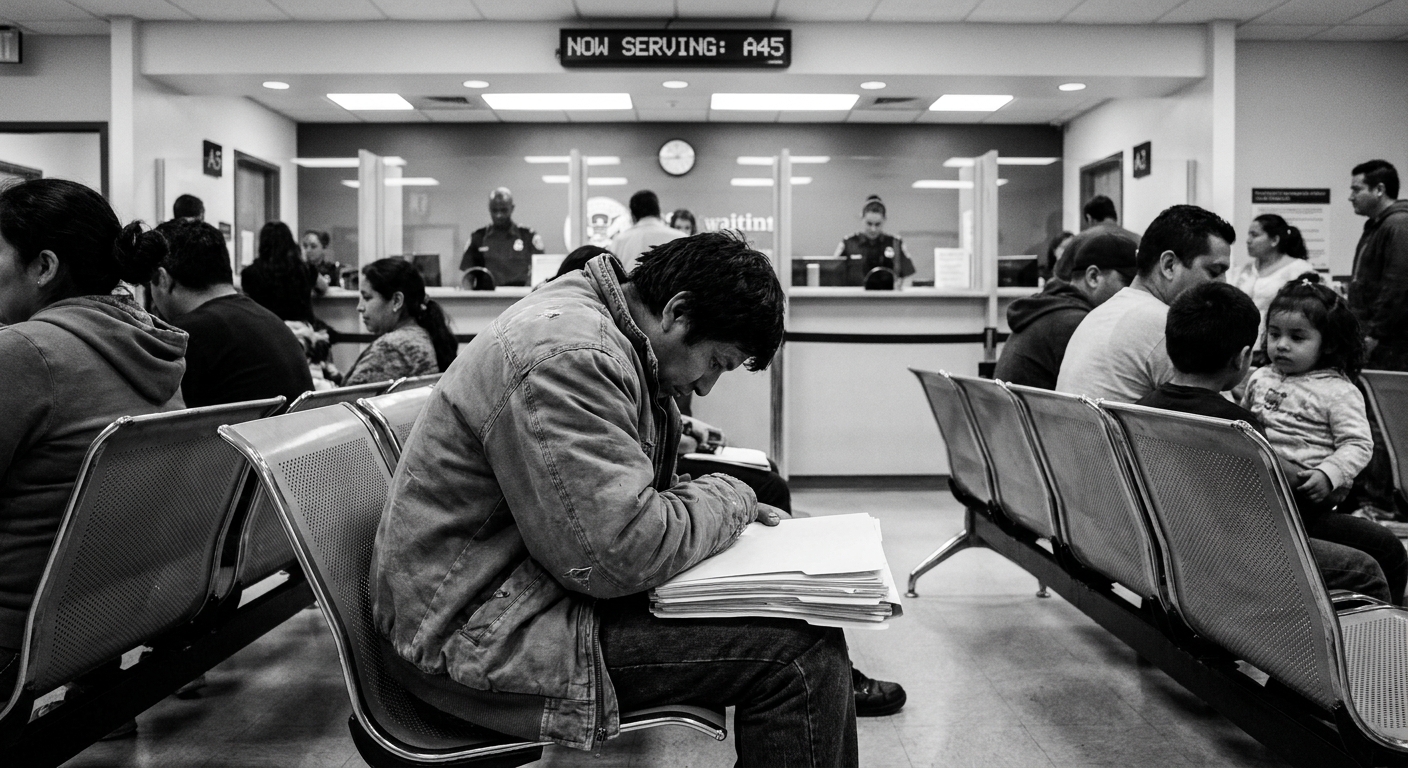
DACA operates like a renewable grant of time.
- Duration: Typically granted in set periods (commonly two years at a time) with the possibility of renewal.
- Renewals: Recipients must reapply, pay fees, and pass background checks again.
- Discretion: DACA is discretionary. Even if a person meets the criteria, the government still has legal room to deny based on broader enforcement priorities.
That last point matters constitutionally. DACA rests on a long-recognized executive power: prosecutorial discretion, the idea that the executive branch cannot possibly enforce every violation against every person, so it sets priorities. The controversy is about scale and structure, not about whether discretion exists at all.
Why DACA is controversial
DACA triggers a constitutional and administrative debate that goes beyond immigration.
1) Congress versus the President
The Constitution gives Congress broad power over naturalization and immigration policy through legislation. Presidents, meanwhile, execute the laws. DACA raises the question: when does “enforcement discretion” become “new law”?
Supporters argue DACA is a lawful prioritization of limited enforcement resources and a humane response to a Congress that repeatedly failed to pass a permanent solution. Critics argue it effectively creates a large new category of authorized presence and work permission without congressional approval.
2) The Administrative Procedure Act (APA)
Much of the litigation has turned on administrative law, especially the APA, which governs how federal agencies make and rescind major policies.
- Courts have scrutinized whether DACA was adopted using procedures required for significant rules.
- Courts have also scrutinized whether attempts to end or revise DACA were done with adequate reasoning and lawful process.
3) The human stakes collide with legal fragility
DACA recipients often have lived in the U.S. most of their lives. They work, pay taxes, raise children, and build careers. But the program’s foundation has been vulnerable: it began as a policy memo, and later was formalized by regulation, yet it still is not a statute. So the legal fight is not academic. It determines whether stability in someone’s life is a promise or a pause button.
A brief timeline
Here is the short version, without the procedural weeds:
- 2012: DHS creates DACA (initially through a policy memorandum).
- 2017: The Trump administration announces an end to DACA.
- 2020: In Department of Homeland Security v. Regents of the University of California, the Supreme Court blocks the 2017 rescission because the administration’s process and reasoning were inadequate under the APA. The Court did not decide DACA’s underlying legality.
- 2021: In Texas v. United States, a federal district court rules DACA is unlawful and blocks new initial grants while allowing existing recipients to seek renewals during further proceedings.
- 2022: DHS issues a final rule aiming to preserve DACA through formal regulation (effective Oct. 31, 2022).
- 2022 to present: Appeals and further rulings continue to test whether the 2022 rule fixes the legal defects identified by the courts. Renewals have often continued while initial approvals have faced restrictions depending on current court orders.
Because litigation is ongoing and court orders can shift, readers should treat any status snapshot as time-sensitive and check current USCIS guidance for the latest.
The constitutional big picture
When we argue about DACA, we are really arguing about how a constitutional system handles a problem it cannot ignore and cannot easily solve.
Immigration enforcement is executive power. Immigration status categories are typically legislative power. DACA sits in the seam between them.
The Founders did not design an immigration code. They designed separated powers and expected conflict to force accountability. DACA is that conflict in modern form: a policy created when Congress did not act, sustained through public reliance, and then pulled through the courts to answer a basic question of constitutional governance.
Common questions
Is DACA amnesty?
DACA is not a forgiveness of unlawful entry and it is not a permanent legal status. It is a temporary decision to defer removal plus eligibility to apply for work authorization for eligible recipients. People disagree on whether “amnesty” is an accurate political label, but legally DACA does not erase immigration violations or create citizenship.
Does DACA protect you from deportation forever?
No. DACA is time-limited, renewable, and discretionary. It can be terminated individually and it can be altered or ended through future executive decisions and court rulings.
Can DACA recipients travel?
Sometimes. DACA by itself does not guarantee travel permission. Some recipients may request Advance Parole for specific purposes (humanitarian, educational, or employment) and, if approved, travel and seek lawful re-entry. Policies and availability have shifted over time, so it is essential to check current USCIS guidance before making plans.
Can a DACA recipient get a green card?
Sometimes, but not because DACA itself is a green card pathway. Any route to permanent residence depends on separate provisions of immigration law and an individual’s circumstances.
Why doesn’t Congress just pass a law?
Congress can. Various proposals, including versions of the DREAM Act, have repeatedly failed due to disagreements over border policy, eligibility, and broader immigration tradeoffs. DACA exists largely because the political system deadlocked while real people continued living in legal limbo.
What to watch
- Federal appellate decisions on whether the 2022 DHS rule cures the legal defects courts identified.
- Supreme Court interest: the Court may eventually decide the underlying legality directly.
- Congressional action: a statute would be more durable than executive policy, but politically harder.
DACA has always been a bridge. The constitutional question is whether the bridge is a permissible use of executive discretion or a structure that must be built by Congress. The civic question is what it says about a republic when millions can grow up American in every practical way, yet remain legally provisional.
Sources and further reading
- U.S. Department of Homeland Security, USCIS: DACA guidance and policy updates
- Department of Homeland Security v. Regents of the University of California (2020)
- Texas v. United States (DACA litigation, including the 2021 district court decision and subsequent appeals)
- DHS DACA Final Rule (effective Oct. 31, 2022), as published in the Federal Register
- Administrative Procedure Act (5 U.S.C. §§ 551 et seq.)