
An arraignment is the moment the criminal justice system stops being a rumor and becomes a calendar appointment.
It is a formal court hearing where charges are addressed on the record, a plea is entered, counsel is confirmed, and the court decides what happens to you while the case moves forward. In many places it is one of the first court appearances, although some jurisdictions hold an initial appearance (or first appearance) before or alongside formal charging, and felony cases may be arraigned again after an indictment.
It sounds procedural because it is. But arraignment is also where constitutional rights go from abstract promises to practical guardrails. This is where the right to counsel is put to work in real time, where the Constitution limits excessive bail, and where due process requires that you are told what the government is charging you with.
Join the Discussion
Arraignment, defined
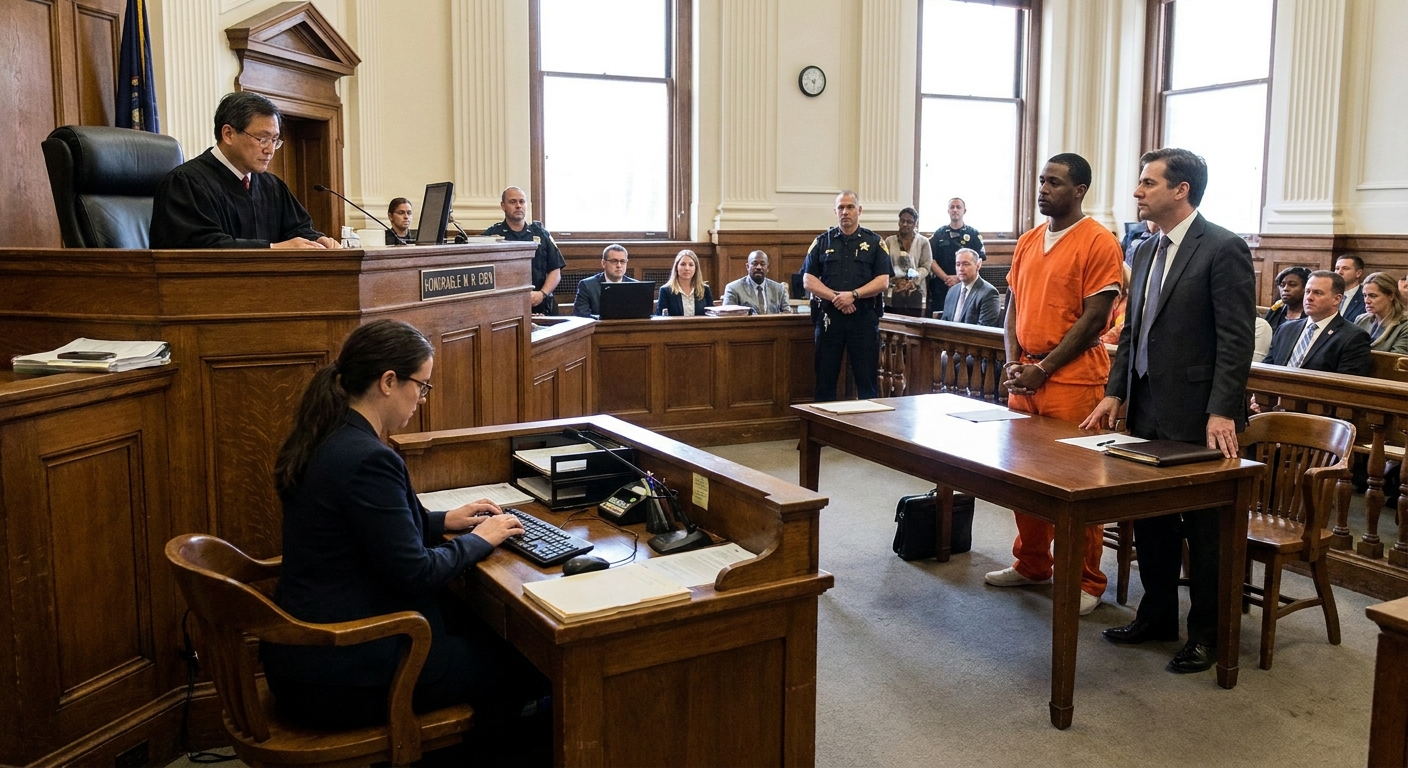
Arraignment is a court hearing where a judge:
- States the charges (often by reading them or summarizing them)
- Confirms identity and basic information
- Advises the defendant of key rights (especially the right to counsel)
- Asks for a plea (guilty, not guilty, or no contest depending on the jurisdiction)
- Addresses release conditions (bail, bond, or other restrictions), sometimes at this hearing and sometimes earlier or later
- Sets next dates (pretrial conference, motions, preliminary hearing, or trial scheduling)
If you have ever wondered why movies show a judge saying, “How do you plead?” this is the real-life setting.
Where arraignment fits
The steps vary by state and by whether the case is in state or federal court, but a simplified sequence looks like this:
- Arrest or citation (or sometimes an investigation without an arrest)
- Initial appearance in many jurisdictions (often where counsel and release may be addressed early)
- Charging decision by a prosecutor
- Filing of a complaint, information, or indictment
- Arraignment
- Pretrial stage (discovery, motions, negotiations, hearings)
- Trial or plea agreement
- Sentencing (if there is a conviction)
Think of arraignment as the gateway between “the government says you did this” and “the court now officially has the case and will manage it.”

What happens at arraignment
1) The court identifies you and the case
The judge or clerk confirms your name, and the case number is called. In some courts the judge may also confirm your address or ask whether you need an interpreter.
2) You are told the charges
Due process requires notice. The government cannot meaningfully prosecute you for a crime without telling you what it is. At arraignment, the charges are formally presented, often drawn from the criminal complaint, information, or indictment.
3) Counsel is addressed
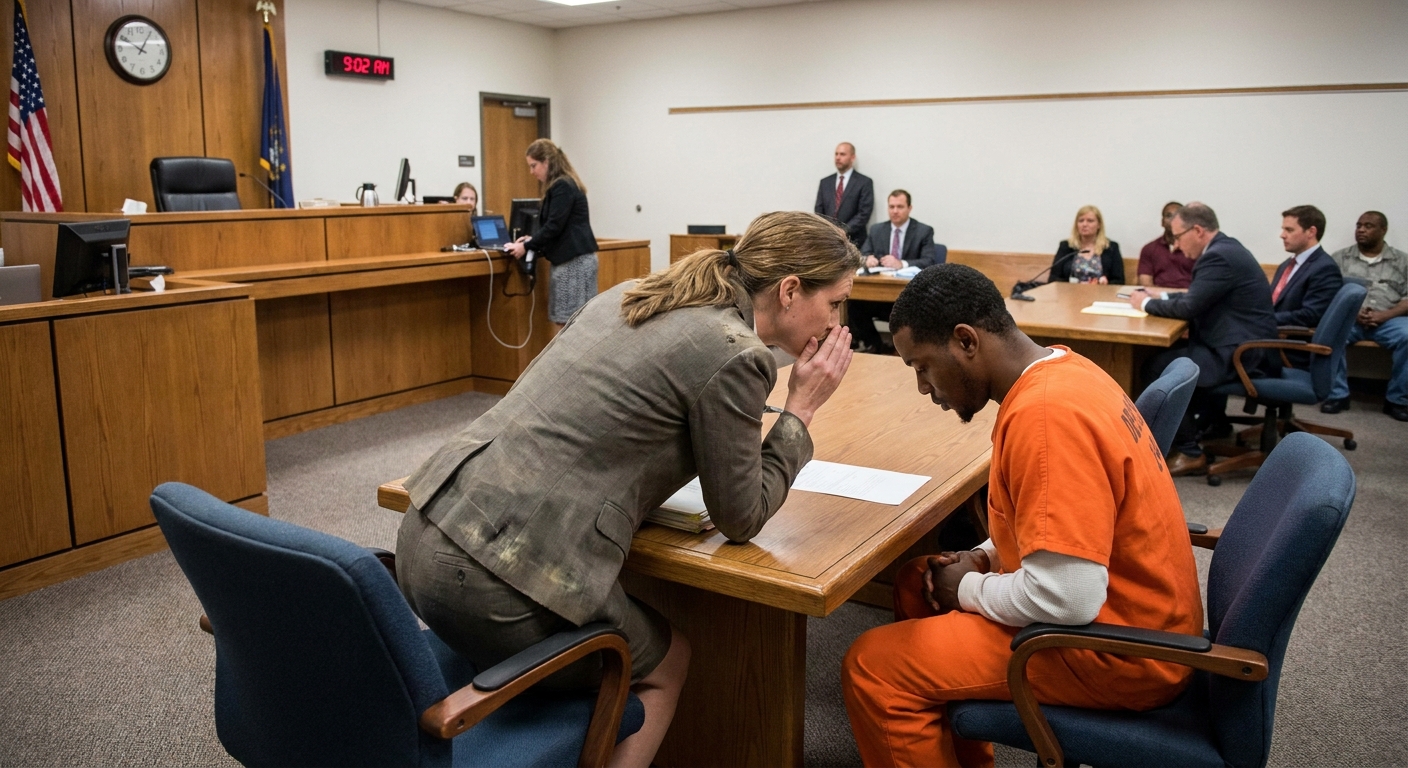
This is one of the most important early moments in a case. The Sixth Amendment right to counsel generally attaches once adversary judicial proceedings begin, such as by formal charge, preliminary hearing, indictment, information, or arraignment. Arraignment is often where the court confirms you have a lawyer or can get one. If you cannot afford an attorney, the court typically asks questions to determine whether you qualify for a public defender or appointed counsel.
4) A plea is entered
Common pleas include:
- Not guilty: The default in many cases, especially at the first formal plea entry.
- Guilty: A conviction without trial. Courts will usually ensure the plea is knowing and voluntary before accepting it. In some courts, pleading guilty at arraignment can lead to immediate sentencing, so it is a decision to make carefully and usually with counsel.
- No contest (nolo contendere): You do not admit guilt, but you accept conviction. Availability and effects vary by jurisdiction.
Many defendants plead not guilty at arraignment even if they later accept a plea deal. That is not evasive. It is often prudent, because it preserves rights while counsel reviews evidence and options.
Two variations show up often in real courtrooms:
- Standing mute: If a defendant does not enter a plea, many courts will enter a not guilty plea on the defendant’s behalf.
- Waiver of arraignment: In many jurisdictions, a represented defendant can waive the formal hearing and enter a not guilty plea by written paperwork or through counsel, with the court setting dates and conditions without a full in-court colloquy.
5) Release and bail may be decided
The judge may:
- Release you on your own recognizance
- Set money bail or bond
- Impose conditions (no contact orders, travel limits, drug testing, firearms restrictions)
- Order pretrial detention in limited circumstances
In federal court, release and detention decisions are governed by the Bail Reform Act, and they are often addressed at the initial appearance and sometimes revisited at arraignment. In state courts, the legal standard varies. The constitutional backdrop includes the Eighth Amendment prohibition on excessive bail, and some state constitutions or statutes provide broader rights to bail in many cases.
6) Next steps are scheduled
The court sets the next hearing, which might be a preliminary hearing (in some felony cases), a pretrial conference, or deadlines for motions.
Do you have to speak?
You generally do not need to explain your side of the story at arraignment. In fact, this is a point that gets people into trouble: arraignment is not the time to argue facts, relive the incident, or improvise defenses.
Usually you will answer only what is required, such as confirming your name and entering a plea through counsel. If you are represented, your attorney will typically speak for you.
There is also a constitutional principle in the background: the Fifth Amendment protection against self-incrimination. You do not have to help the government prove its case, and early off-the-cuff statements can become evidence.
Rights that matter
Sixth Amendment: right to counsel
The Sixth Amendment promises the assistance of counsel. In practical terms, arraignment is often where the court ensures you have a lawyer or can get one. If you waive counsel, the court may ask questions to confirm that the waiver is knowing and voluntary.
Fifth and Fourteenth Amendments: due process and notice
At minimum, due process means you are told the charges and the court proceeds under lawful procedures. In state cases, many of these protections apply through the Fourteenth Amendment.
Eighth Amendment: excessive bail
The Constitution does not guarantee bail in every case, but it does prohibit excessive bail. What counts as excessive is contested and fact-specific. Courts often consider flight risk, community safety, and the nature of the alleged offense.
Speedy trial rights
The Sixth Amendment also guarantees a speedy trial. In constitutional terms, analysis is typically triggered by arrest or formal accusation, while statutory speedy-trial clocks can start at different procedural moments depending on the jurisdiction. Arraignment is often an early marker that the case is now moving under the court’s timetable.
State versus federal
Most arraignments happen in state court because most criminal cases are prosecuted by states. Federal arraignment follows federal rules and tends to be more standardized, but the basic goals are similar.
State court
- Procedures differ widely from state to state and even county to county.
- Some states combine initial appearance issues, arraignment, bail review, and scheduling in a fast-moving docket.
- Felony cases may have multiple early hearings, including a preliminary hearing or grand jury process.
Federal court
- Governed by the Federal Rules of Criminal Procedure.
- Often follows an initial appearance before a magistrate judge.
- Release conditions are set under the Bail Reform Act, sometimes at the initial appearance and sometimes revisited later.
Common misconceptions
“Arraignment is the trial.”
No. No witnesses testify, no jury decides guilt, and evidence is not fully litigated. Arraignment is a procedural kickoff.
“If I plead not guilty, the judge will be angry.”
Not guilty is routine. It is not a personal insult to the court. It is a legal position that triggers the next steps of the process.
“Bail is a constitutional right.”
The Constitution prohibits excessive bail, but it does not guarantee release in every case. Some states do provide broader bail rights by constitution or statute, but even there, exceptions and conditions can apply.
“If the charges are read, that means the judge thinks I did it.”
At arraignment, the judge is not deciding guilt. The court is ensuring notice and setting the case in motion.
How to prepare
This is not legal advice, but these are practical, widely applicable steps people often overlook:
- Show up. Missing arraignment can lead to a bench warrant.
- Bring identification and any paperwork you received.
- Ask about counsel if you do not have a lawyer.
- Do not discuss facts in open court unless your attorney advises it.
- Know your release situation. If bail is likely, have a plan for who can assist.
Arraignment is short, but it is not small. Conditions set here can shape months of your life while the case is pending.
What happens after
After arraignment, the case enters the pretrial phase. That often includes:
- Discovery: exchanging evidence and police reports
- Motions: challenges to evidence, searches, statements, or the legal sufficiency of charges
- Plea negotiations: potential agreements that avoid trial
- Hearings: preliminary hearing in some cases, suppression hearings in others
- Trial setting: if the case does not resolve
If you want a single takeaway, make it this: arraignment is where the system tells you, officially, what it is accusing you of. Everything after that is your opportunity to test whether the government can prove it.
Quick glossary
- Complaint: a document that initiates charges, often supported by an affidavit.
- Information: a formal charging document filed by a prosecutor, common in state practice.
- Indictment: charges approved by a grand jury.
- Recognizance: release based on a promise to return to court, often with conditions.
- Bond: a financial guarantee of appearance, sometimes through a surety.