
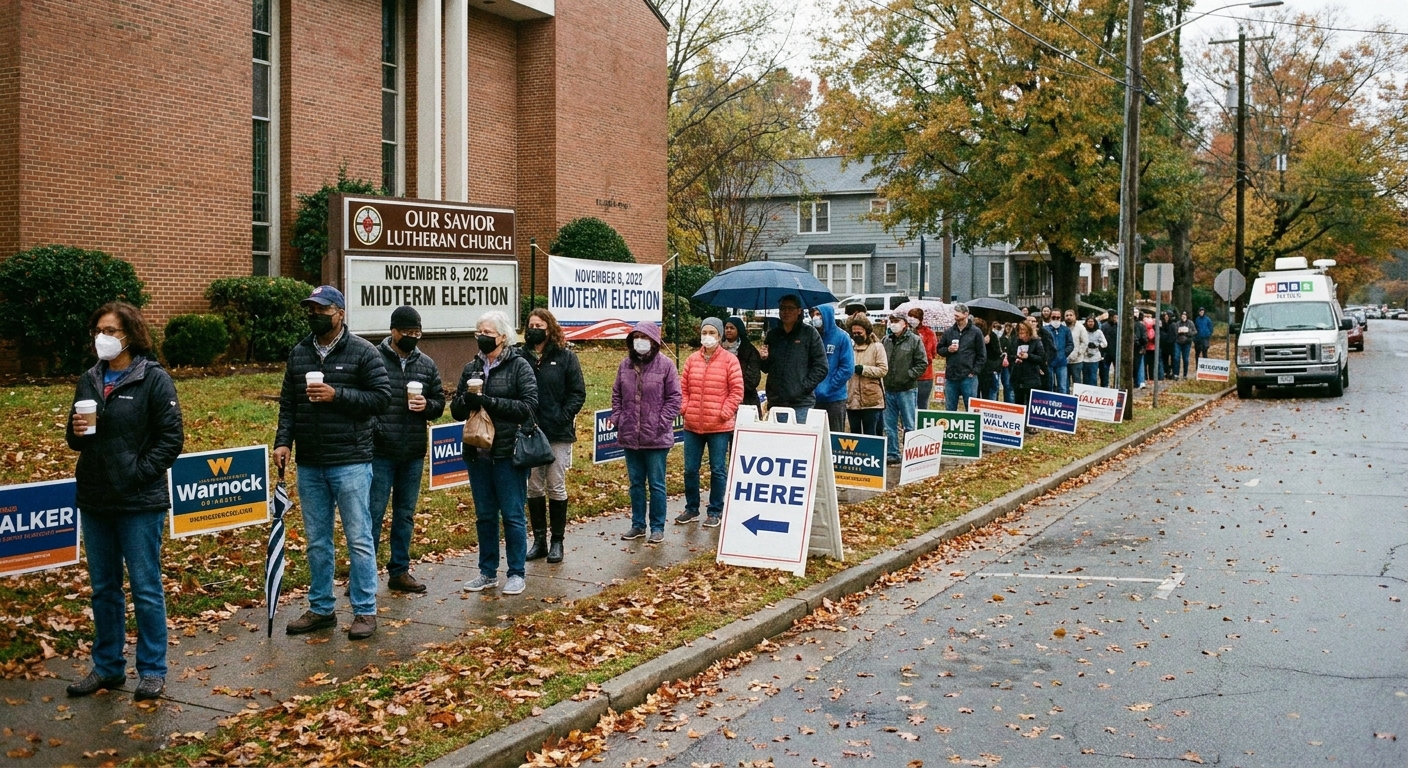
“Midterm election” sounds like a scheduling detail, like halftime. But in American politics, midterms are a constitutional pressure test. They are the election that asks, halfway through a president’s four-year term, whether the country wants to reinforce the direction of the federal government or put limits on it.
And because the Constitution splits power across branches and levels of government, a midterm can change the nation’s trajectory without changing the president at all.
Join the Discussion
What is a midterm election?
A midterm election is a nationwide election held every two years, occurring midway through a president’s four-year term. Midterms are the elections in which voters choose:
- All 435 seats in the U.S. House of Representatives
- About one-third of the U.S. Senate (Senators serve six-year terms, so the Senate is elected in staggered cycles)
- Many state and local offices, depending on the state, including governors, state legislators, attorneys general, secretaries of state, mayors, judges, and school boards
Midterms do not include the presidential election itself. That is why they are called “midterms” instead of “general elections,” even though they are general elections for many offices.
When are midterm elections held?
Federal elections happen every two years, always in even-numbered years. But midterms are the even-numbered-year elections that fall between presidential elections. In other words, they happen every four years, alternating with presidential elections: 2018, 2022, 2026, and so on.
Under federal law, federal elections are held on Election Day, which is the first Tuesday after the first Monday in November.
So if the United States elects a president in 2024, the midterm election in that presidential term is in November 2026.
What is on the ballot in a midterm?
U.S. House: all seats, every time
The Constitution sets House terms at two years. That means every midterm is automatically a national referendum on House control, because the entire chamber is up for election.
U.S. Senate: only some seats
Senators serve six-year terms. The Senate is divided into three “classes,” and roughly one class is up for election every two years. In a midterm year, voters elect about 33 or 34 Senate seats, plus any special elections to fill vacancies.
Governors and state offices: depends on the state
Many states elect governors in midterm years, but not all. Some states hold gubernatorial elections in presidential years. Many states also elect state legislators, and a wide range of executive offices.
Local offices and ballot measures
Midterms often include local races and ballot questions, such as tax measures, school funding, constitutional amendments at the state level, and changes to election rules.
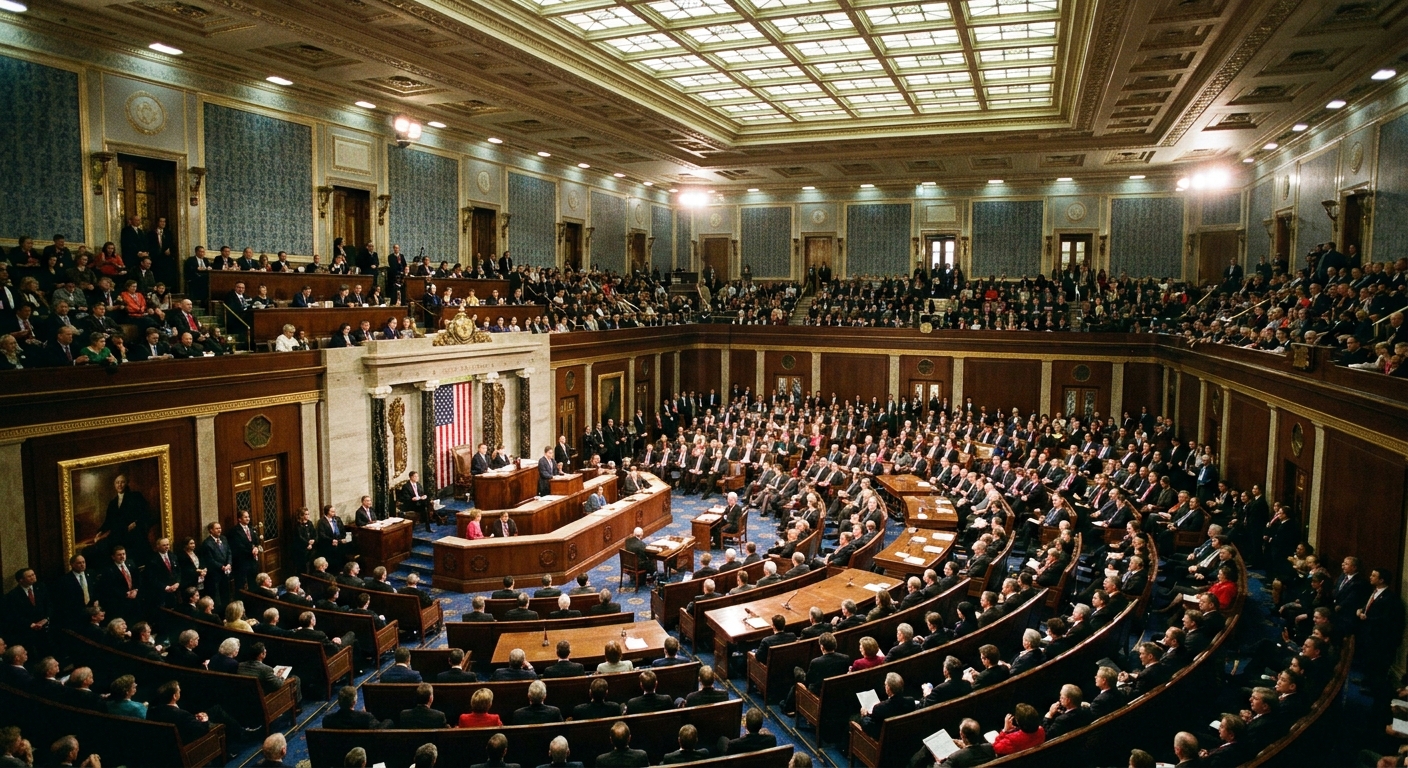
Why midterms matter constitutionally
The Constitution is designed for friction. Elections are one of the key ways the public can introduce that friction, or remove it.
1) Midterms can create divided government
If the president’s party loses the House or Senate, Congress can become a brake on the executive branch. That changes what laws can pass, what judges can be confirmed, and what investigations can be launched.
2) The House controls the purse
All revenue bills must originate in the House. Even when the Senate amends and negotiates, the House’s role is structurally central. When the House flips, the political meaning of the budget, appropriations, and government shutdown threats often flips with it.
3) The Senate controls confirmations
The Senate provides “advice and consent” on federal judges and major executive appointments. A midterm that changes Senate control can reshape:
- Which judicial nominees reach the bench
- How quickly vacancies are filled
- Whether a president’s nominees are stalled or advanced
4) State offices shape federal elections
The Constitution leaves most election administration to the states, subject to federal constraints. State legislators and executive officials can influence:
- District maps and redistricting (especially after the census)
- Voting rules, registration procedures, and ballot access
- Certification processes and election oversight structures
So a “midterm” is not only about Washington. It is also about who holds the levers of power closer to home.
Do midterms usually go against the president?
Often, yes. Historically, the president’s party frequently loses seats in midterm elections. There are multiple reasons, including:
- Turnout patterns: presidential years typically bring out more voters than midterms
- Midterm as accountability: voters use midterms to register satisfaction or frustration
- Coalition intensity: the out-party often has a more energized base
But it is not a law of nature. Major events, economic conditions, and candidate quality can override the historical pattern.
Midterms and the Constitution
The Constitution does not use the phrase “midterm election.” But it builds midterms into the system through term lengths and staggered elections.
- Article I, Section 2 sets two-year House terms, guaranteeing frequent elections and rapid political feedback.
- Article I, Section 3 establishes six-year Senate terms with staggered classes, so the Senate is never fully replaced at once.
- The Seventeenth Amendment (direct election of Senators) means voters, not state legislatures, decide Senate control in modern midterms.
Put together, the system ensures that even if a president has four years, the public has a built-in chance to reshape Congress at the halfway point.
Midterms and the “referendum” myth
Midterms are often described as a referendum on the president. Politically, that can be true. Constitutionally, it is incomplete.
A midterm is a referendum on far more than the White House. It is also a referendum on:
- Whether Congress should cooperate with the president or constrain the president
- How aggressively oversight will be used as a check on executive power
- What kind of judges will be confirmed, and what constitutional arguments will dominate in federal courts
- How states will run elections, draw districts, and set policy that shapes daily life
Midterms are how the system proves it is not a one-election democracy.
Quick midterm FAQ
Are midterms federal or state elections?
Both. Midterms include federal elections (House and some Senate seats) and many state and local elections held on the same date.
Do you vote for the president in a midterm?
No. The president is elected every four years in presidential election years.
What is a “midterm year”?
It usually refers to the even-numbered year between presidential elections, like 2022 or 2026.
Can midterms change laws immediately?
Not by themselves. Elections change who holds office. New majorities can then pass or block legislation, confirm or stall nominees, and set oversight priorities.
Why midterms are a constitutional moment
Every presidential election feels like the hinge of history. Midterms are quieter, and that is precisely why they matter. They are the election where the country can choose balance over momentum, or momentum over balance, without rewriting a single clause of the Constitution.
If you want to understand how a document written in 1787 still governs a modern superpower, watch what happens in November of a midterm year. The Constitution’s checks and balances are not abstract. They show up as seat counts.